Download
1 / 7
70 likes | 198 Vues
This lecture explores the various types of wood adhesives, focusing on their chemical nature and classification. We delve into organic and synthetic adhesives, highlighting examples such as blood protein, milk protein, and polyvinyl acetate. The lecture distinguishes between thermoplastic and thermosetting adhesives, explains the significance of polymers, and categorizes adhesives by origin and use. Additionally, we discuss adhesive additives designed to enhance performance and characteristics, making this session essential for anyone interested in forestry and adhesive technology.

E N D
Forestry 485 Lecture 2-5: Specific Types of Adhesives
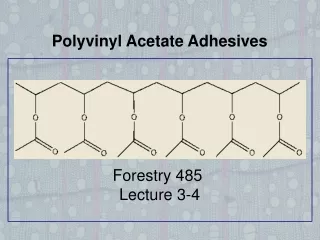
Chemical Nature of Wood Adhesives • Organic, Polymeric Chemicals • Natural origin, e.g., blood protein, milk protein, starch (carbohydrate) • Synthetic origin, e.g., phenol formaldehyde, isocyanate, polyvinyl acetate (“Elmer’s glue”) • Thermoplastic (soften upon heating, harden upon cooling, re-soften upon heating) • Thermosetting (chemically reactive, once hardened, they do not soften upon subsequent re-heating)
Polymers from Latin Poly = Many; Meros = Units General Definition – molecules with high molecular weight composed of many smaller repeating units.
Natural Carbohydrate Starch Cellulose Protein Plant-based (e.g., soybeans) Animal-based Protein from hides, bones, sinew Liquid (“hide” glue) Solid (“hot animal glues) Blood Casein (milk) Lignocellulosic Extracts Tannins Lignin Synthetic Polyvinyl acetate (PVA) Elastomeric contact adhesives (e.g., styrene butadiene) Elastomeric mastic (construction adhesives) Hot melts Epoxy Urea formaldehyde Phenol formaldehyde Polymeric isocyanate Resorcinol Melamine Polyurethane Classification by Origin Vick, 1999. Table 9-3
Structural Fully Exterior Phenol formaldehyde Resorcinol formaldehyde PRF Isocyanate emulsion Melamine formaldehyde Limited Exterior MUF Isocyanate Epoxy Interior Urea formaldehyde Casein Semi-structural Cross-linked PVA Polyurethane Nonstructural PVA Animal protein (except casein) Plant protein Elastomeric construction Elastomeric contact Hot melt Starch/carbohydrate Classification by Use Category Vick, 1999. Table 9-2
Major Synthetic Resins Used in Composite Panels: Phenol formaldehyde Urea formaldehyde Isocyanate White, 1995
Adhesive Additives • Catalysts: Increase chemical reaction rate of adhesive during cure (e.g., ammonium chloride used for UF resins) • Extenders: Low cost additives that enhance adhesive handling, flow, or working characteristics and provide some adhesive function (e.g., wheat flour) • Fillers: Low cost additive that modify adhesive working characteristics but do not provide adhesive function (e.g., corn cob powder) • Other additives may include plasticizers, tackifiers, antioxidants, formaldehyde scavengers, colorants, wetting agents, defoamers, etc.