Solving Angles in Triangle Geometry: Find ∠CDE Given ∠ACB and ∠DEF
In this geometry problem, we are tasked with finding the measure of angle ∠CDE using the given angles ∠ACB = 20° and ∠DEF = 130°. It is established that the sum of angles of a triangle equals 180°. This situation is further analyzed using properties such as supplementary angles and vertical angle congruence. By applying these principles, we ultimately determine that ∠CDE can be calculated as 110°. Let’s delve into the calculations step-by-step to solidify our understanding of triangle angle relationships.

Solving Angles in Triangle Geometry: Find ∠CDE Given ∠ACB and ∠DEF
E N D
Presentation Transcript
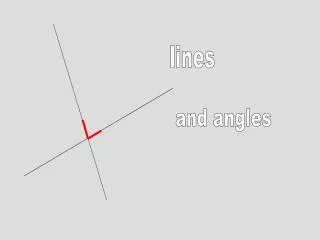
lines and angles
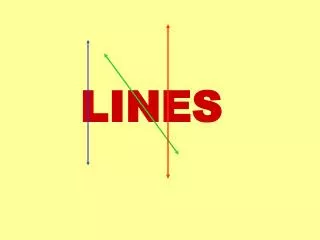
Given: ACB = 20° DEF = 130° Find: CDE = __________ D F A E C B
Given: ACB = 20° DEF = 130° Find: CDE = __________ D F A 20° E C 20° B vertical (opposite) angles have the same measure
Given: ACB = 20° DEF = 130° Find: CDE = __________ D F 130° A 20° E C B
Given: ACB = 20° DEF = 130° Find: CDE = __________ D F 130° 50° A 20° E C B supplementary angles have measures whose sum is 180°
Given: ACB = 20° DEF = 130° Find: CDE = _110°______ D F 50° A 20° E C B the sum of the measures of the angles of a triangle is 180°
A C B D F E G I H
A C B D F E G I H
A C B 150° D F 150° E G 150° I H
A C 140° B 150° D F 150° E G 150° I H
A C 140° 110° 40° B 110 30° 150° D F E G I H