Enhancing Access to Quality Drugs via Accredited Drug Dispensing Outlets in Rural Areas
This study explores the establishment of Accredited Drug Dispensing Outlets (ADDOs) as a solution to improve access to quality drugs and services in rural and peri-urban areas of Tanzania, where pharmacies are scarce. Identifying challenges such as unqualified staff and poor regulatory practices in existing drug shops, the initiative focuses on transforming these outlets through training, advocacy, and a regulatory framework. Preliminary results indicate improvements in drug quality, availability, affordability, and regulatory adherence, suggesting that ADDOs can positively impact health outcomes.

Enhancing Access to Quality Drugs via Accredited Drug Dispensing Outlets in Rural Areas
E N D
Presentation Transcript
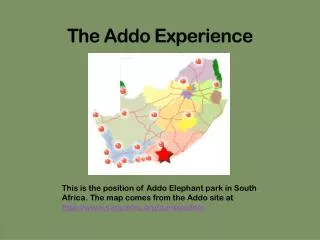
Accredited Drug Dispensing Outlets (ADDOs): Improving Access to Quality Drugs and Services in Rural and Peri-urban Areas with Few or No Pharmacies Authors: M. Ndomondo-Sigonda, R. Mbwasi, R. Shirima, N. Heltzer, M. Clark
ADDO Background (1) • MSH/SEAM Tanzania Survey 2001 • Assess drug supply and access issues • Initiatives developed to address access issues • Accredited Drug Dispensing Outlets (ADDOs)
ADDO Background (2)Problems with Part II Shops • Chronic violation of Regulations • Unqualified Staff • Unknown drug quality • Selling PoM • High drug prices • Inadequate regulation
ADDO Background (3)Where People Buy Medicines 339 Part I drug outlets (pharmacies) Most Part I shops located in urban areas while 80% of population in rural areas > than 4000 Part II drug shops Population is largely rural - only 17% have access to private pharmacies Part II shops (DLDBs) more accessible to population than all other public or private drug outlets
ADDO Objective • Objective: Transform existing Part II shops into a regulated system of profitable ADDOS that will improve availability and quality of drugs and services in communities where there are few or no pharmacies
ADDO Strategies • Strategies • Training – dispensers, owners, local inspectors • Social Marketing program to promote behaviour change – consumers and owners • Commercial incentives • Supportive supervision • Modified legal and regulatory framework
ADDO Implementation • Pilot and control Regions/Districts selected, then • Formative Research • Advocacy: Government and Private Sector • Regulatory Activities: Regulations and Code of Ethics • Approved Part I (Prescription) Drug List • Training: inspector, dispenser, owner • Commercial Incentives • Communications / Marketing Campaign
Baseline Research • Baseline assessments in pilot and control districts • Drug quality, availability, affordability • Dispenser knowledge and practice for diagnosing and treating malaria, diarrhea and acute respiratory infections • Dispenser dispensing practices (record keeping, storage, prescription packaging and labeling, etc.) • Dispenser knowledge of drug quality • Characteristics of premises • Dispenser training/educational background
Key Interim Results (1)DRUG QUALITY • All tracer drugs TFDA registered or approved
Key Interim Results (2)AVAILABILITY Essential drug availability: Improved
Key Interim Results (3)AFFORDABILITY Affordability: Stable despite increased owner expenses (ex. personnel, premises, expanded inventory)
Key Interim Results (4)REGUALTORY ADHERENCE Regulatory adherence: Improved
Key Interim results (5)CONSUMER ACCEPTANCE • Sales and customer data indicative of community acceptance
ADDOs: Conclusions • Knowledge gaps documented • Strategies developed and interventions implemented • Importance of drug shops • Additional research • Do ADDOs improve health outcomes and rational drug use • Cost-benefit analysis • Scaling up of the programme • Rural • Urban