Introduction to DAO Tools, A Comprehensive Guide
0 likes | 11 Vues
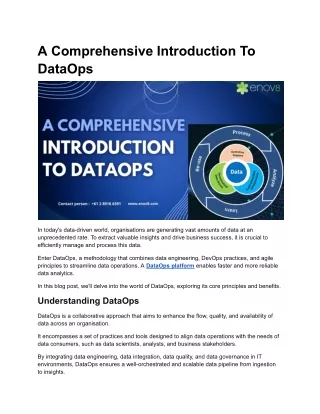
Decentralized Autonomous Organizations (DAOs) are revolutionizing governance by enabling transparent, trustless decision-making. DAO tools play a crucial role in managing and automating these decentralized entities. This guide explores DAO tools, their importance and how to choose the right one.


Introduction to DAO Tools, A Comprehensive Guide
E N D
Presentation Transcript
Decentralized Autonomous Organizations (DAOs) are revolutionizing governance by enabling transparent, trustless decision-making. DAO tools play a crucial role in managing and automating these decentralized entities. This guide explores DAO tools, their importance and how to choose the right one. What Are DAOs? Definition and Key Concepts A DAO is an organization governed by smart contracts and blockchain technology, eliminating centralized control. Members vote on proposals and decisions are executed automatically based on consensus rules. DAOs operate on principles of transparency, immutability and community-driven governance.
Unlike traditional organizations, DAOs do not rely on hierarchical structures. Instead, they leverage blockchain technology to enforce rules and distribute authority fairly. They can be used for a variety of purposes, such as investment funds, charitable organizations, freelancer collectives and more. The effectiveness of a DAO depends on well-designed governance mechanisms, which DAO tools help implement. Why DAO Tools Are Critical for Decentralized Governance Automation: DAO tools eliminate the need for intermediaries, allowing for seamless execution of rules and proposals. Transparency: Every action and decision is recorded on the blockchain, ensuring accountability among members. Security: Smart contracts ensure trustless execution, reducing the risk of fraud and mismanagement. Efficiency: DAO tools streamline proposal management, voting and fund allocation, reducing administrative overhead. Scalability: As DAOs grow, governance complexity increases. DAO tools facilitate scalable governance models that adapt to larger communities.
Interoperability: Many DAO tools integrate with multiple blockchains and DeFi protocols, making them versatile for different applications. Overview: Comparing Top DAO Tools Several DAO platforms facilitate decentralized governance. Key players include: Aragon: Known for its modular governance framework, allowing DAOs to be tailored to specific needs. DAOstack: Focuses on scalable governance solutions with its unique holographic consensus model. Colony: Specializes in decentralized workforce collaboration, making it ideal for managing teams and payments. MolochDAO: Designed for grant funding and collective investment, often used by communities supporting Ethereum projects. Snapshot: A voting tool that allows DAOs to conduct off-chain governance decisions, reducing transaction costs. 1. Aragon DAO Platform Open-source platform that enables users to create and manage DAOs with customizable governance structures.
Features modular governance structures with customizable smart contracts, enabling flexible decision-making processes. Provides dispute resolution mechanisms through Aragon Court, allowing DAOs to settle conflicts without relying on traditional legal systems. Supports multiple blockchain networks, including Ethereum, Polygon and other EVM-compatible chains. Offers an intuitive dashboard that simplifies DAO management, proposal submission and voting. Used by various organizations, including decentralized finance (DeFi) projects, social clubs and business collectives. 2. DAOstack Governance Platform Uses “Holographic Consensus” for scalable governance, ensuring that decisions can be made efficiently even in large communities. Offers a user-friendly interface for proposal management and voting, lowering the barrier to entry for non-technical users. Focuses on decentralized decision-making with reputation-based voting, where voting power is determined by an individual’s contributions to the community.
Supports DAOs in allocating resources efficiently through DAOstack’s Alchemy interface, a platform that automates governance workflows. Ideal for DAOs that require a scalable decision-making model, such as research collectives and funding pools. 3. Colony DAO Platform Designed for decentralized workforce and project management, allowing teams to operate autonomously without central oversight. Uses a reputation-based governance system, where contributions determine decision-making power. Allows flexible payment structures for contributors, enabling automated payments based on task completion. Features automated dispute resolution and reputation tracking, ensuring that work quality is maintained within the community. Popular among decentralized freelance platforms, cooperative businesses, and open-source development projects. DAO Tools Comparison
(Read More: DAO Tools Comparison: Aragon vs DAOstack vs Colony) Pros and Cons of Each DAO Tool Aragon Pros: Highly customizable, open-source, multi-chain support, strong dispute resolution mechanisms. Cons: Complexity in setup, requires technical knowledge, can be costly in terms of gas fees. DAOstack Pros: Scalable governance model, reputation-based voting, automated resource allocation.
Cons: Learning curve for users, limited to specific governance use cases, requires active participation for reputation accrual. Colony Pros: Ideal for decentralized workforces, built-in payment mechanisms and reputation-driven governance. Cons: Less flexibility for broader DAO governance structures, relies heavily on reputation systems. MolochDAO Pros: Simple and effective for funding and grant distribution, low operational overhead. Cons: Limited governance flexibility, exit mechanisms can be harsh. Snapshot Pros: Gasless, off-chain voting, easy integration with existing DAOs. Cons: No on-chain execution, requires a trusted execution layer. Best DAO Tools for Different Use Cases For General Governance: Aragon For Scalable Decision-Making: DAOstack For Decentralized Work & Payments: Colony
For Funding & Grants: MolochDAO For Off-Chain Voting: Snapshot The Future of DAO Tools Increased adoption: More industries exploring DAO-based governance, from gaming to finance and beyond. Interoperability: DAOs integrating with various blockchain ecosystems, expanding cross-chain functionality. Improved usability: Simplified interfaces for broader accessibility, reducing technical barriers for new users. Legal frameworks: Governments defining regulations around DAOs, leading to greater legitimacy and potential institutional adoption. AI-driven automation: Future DAO tools may integrate AI for predictive analytics, automated decision-making, and governance optimization. Conclusion: Choosing the Right DAO Tool Selecting the right DAO tool depends on the organization’s needs. Aragon offers flexibility, DAOstack excels in scalable governance and Colony is ideal for workforce collaboration. MolochDAO is well-suited for funding initiatives, while Snapshot is best for off-chain voting. As
DAO technology evolves, the choice of tools will expand, making decentralized governance more efficient and accessible.