The Ottoman Empire: The Sick Man of Europe and Its Struggle for Reform
In the mid-19th century, the Ottoman Empire faced significant challenges, earning the title "The Sick Man of Europe." Despite experiencing moderate population growth and no significant uprisings, the empire suffered from territorial losses, economic decline, and the need for reforms. This culminated in the era of Abdul Hamid II, who attempted to modernize and introduce Islam-based reforms. Key events included the opening of the First Ottoman Parliament in 1876 and the Young Turk Revolution in 1908, which sought to transform the empire into a nation-state following World War I.

The Ottoman Empire: The Sick Man of Europe and Its Struggle for Reform
E N D
Presentation Transcript
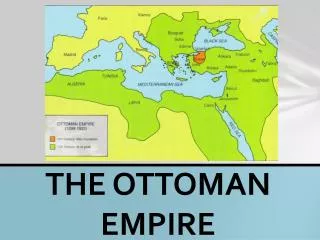
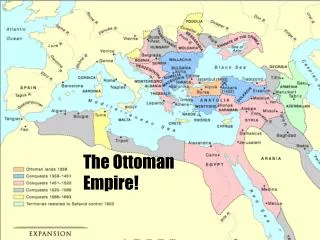
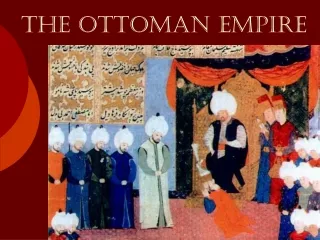
Mid 19th century “The Sick Man of Europe” The Ottoman Empire Greece Territory losses Selim III receiving dignitaries during an audience at the Gate of Felicity, Topkapı Palace. Weak Economy Egypt Tax revenues
Reforms The Good • No major uprising • Moderate population growth • Ottomans not considered foreign rulers… • More authentic attempt at reform Islamic modernism Abdul Hamid II Opening ceremony of the First Ottoman Parliament 1876 • After WWI Ottoman Empire Falls: Turkish nation-state Young Turk Revolution (3 July 1908)
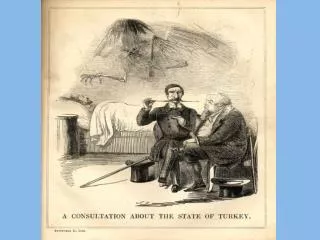
So… • Why was the Ottoman Empire “sick”? (I.e. “The sick man of Europe”)