Download
1 / 29
300 likes | 427 Vues
Learn how to raise livestock on limited land successfully with expert tips and strategies. From setting realistic goals to understanding space requirements and animal choices, this comprehensive guide covers all you need to know for a thriving livestock operation. Explore niche marketing opportunities, major considerations for animal production, and factors affecting production and success. Whether you're a beginner or looking to expand, this guide will help you navigate the challenges and maximize the potential of your dream farm.

E N D
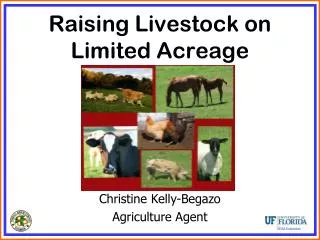
Raising Livestock on Limited Acreage Christine Kelly-Begazo Agriculture Agent
Your Dream Farm • Weed-free pastures • Well-stocked barn • Cute, cuddly animals • Happy children doing chores • Lemonade on the veranda Jonde Lane Farm B&B, Manheim, PA.
Only in…… • Your dreams! • Farmville • Facebook
Reality is…. • Dirty, hard work • Little free time • Stressful, little control • Narrow profit margin • Animals die, or have to die • Significant other is not enthusiastic • Your children hate it! Photos taken from Flickr.com
Stillinterested? • Beforeyoubuyyourfirst animal… • Set realisticgoals • Why do youwantthis? - is thisfor $, self-sufficiency or pleasure • What are yourprioritiesforquality of life? - Enjoyfarmingduring free time? - Can you “harvest” animals? • What is yourlifephilosophy (“Big Picture”) - Environmentalism - Foodsecurity
Do Your Research • Learn everything possible about your product • Growing and feeding • Processing and dressing • Packaging and labeling • Marketing and preparing
Other Issues to Consider • Are you zoned for livestock activity? • Will your neighbors mind? • Distance to nearest feedstore or farm supply store? • Are there consumers/buyers? • Are there any other producers? • Where is the nearest processor? • Is your target market close? • Can you sell legally?
What are the Laws? • Zoning & ordinances • Processing • USDA • State Health • Market system requirements • Labeling • Legal to sell • EGGS
Niche Marketing • Free range • Guaranteed tender • Locally produced • Ethnic foods • Custom slaughter • Organic • Sustainable • Pasture fed • Corn fed • Hormone free Cartoonstock.com
Livestock Choices Traditional Non-traditional Llamas Alpacas Ostrich Emus Buffalo Guinea pig Gator • Hogs • Chickens • Goats • Horses • Cattle • Sheep • Rabbits
Major Considerations for Animal Production Biggest issues
Space Requirements(Stocking Rates) • 3 acres per cow • 3 acres per horse • 1 acre per 6 ewes /goats • Ewes and lambs / 20 sq’ • 30” x 36”x18” rabbit cage for medium breed Note: Space requirements differ and careful evaluation needs to be made prior to developing a business plan
For Example • 100 cows = 300 acres • 3 cows = 10 acres • 100 calves = 50 acres • 100 goats = 16 acres • 3 horses = 9 acres • 100 sheep = 16 acres • 100 rabbits = 900 sq’
Mini’s vs. Regular Size • Generally not considered “real” livestock • Cute, but actual production? • Is there a market/consumer for product? • Goals for having them on site • Same production requirements, just less • Less space, less feed, same vet bill, same set of management skills
Recordkeeping • Inicial Outlay • Land, stock, fencing, bldgs, equipment • Labor • YOUR time, volunteers, family & friends • Production • Reproduction, weight gains • Sales/Income • Inventory
Poultry • Easiest animal to start out with • From chick to production is quick • Relatively quiet for neighbors (no roosters) • Meat and egg production • Many different breeds • conventional, heritage, fancies • Traditional farms used dual-purpose
Limiting Factors Affecting $$ • Predators • # of laying boxes • Area per bird • Parasites • Inadequate nutrition • Lack of water • Genetics • Age of animal
Rabbits • Easy animal to start out with • Small, medium and large breeds • Meat, fur, hair, show • Positive nutritional factors for meat • Age to market weight is quick • Reproduction is rapid • Easiest to feed
Limiting Factors Affecting $$ • Poor breeding stock • Lack of mothering skills • Time to breeding age • Illness in the herd • Poor hygiene • Old or contaminated feed • Lack of water or food • Overheating
Limiting Factors (con’t) • Predators • Lack of market base • Lack of harvest facilities • Location and transportation • Inability to harvest • USDA regulations • Packaging & marketing
Goats/Sheep • Meat, dairy, hair, and wool breeds • Smaller animal = more animals/acre • More efficient use of pasture/browse • Reproduction is adequate • Increasing demand with ethnic markets • Niche market for wool with weavers
Limiting Factors Affecting $$ • Fencing, fencing & more fencing • Milk production is labor intensive • Limited legal market for milk • Lack of harvesting facilities • Lack of shearing capabilities • Parasites!
Swine • Not very popular in Florida • Except with 4-H & FFA • Wild hogs • Limited market • Strong midwestern industry • Lack of harvesting facilities • For more than just a few • Fun to pasture
Cattle • Meat and dairy breeds • Homesteading self-sufficiency • Integrated farming system • Relatively easy to feed • Cow/calf operations • Can produce milk & meat with minatures but…
Limiting Factors Affecting $$ • Need larger tract of land • Transportation and fuel costs • Larger animal harder to control • Longer time to harvest or sell • Increased costs of hay and feed • Dairy industry is heavily regulated • “Pet consumption only”
Horses • Great sink of money • Need good quality pasture • Not necessarily considered agriculture production • Important for ag exemption • “Greenbelt” • Check with property appraiser’s office
Exotics • Have to get in on the beginning of the industry • Money made via a pyramid factor • Selling the breeding animals is how you make the big money • Little $ is made on the actual herd or product • NOT recommended!
In Conclusion • Livestock can be raised for fun and for profit • Should develop a thought out business plan • Profit margins are generally lower with livestock • Consider your location to feedstores, processors and consumers • Niche markets can be profitable for specialized products • Gain experience by raising small numbers before investing heavily