DVM Curriculum Overview
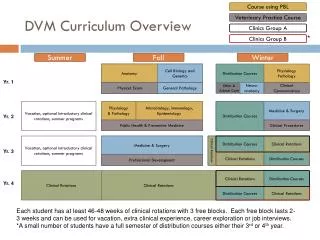
Explore the dynamic Doctor of Veterinary Medicine (DVM) curriculum, featuring hands-on clinical rotations, foundational courses, and specialized training. The program spans over four years, beginning with core subjects like anatomy, cell biology, and ethics in animal care. Students engage in extensive clinical experiences, including medicine, surgery, public health, and preventive medicine, alongside elective courses. With at least 46-48 weeks dedicated to clinical rotations and opportunities for career exploration, students are fully prepared for a successful veterinary practice.

DVM Curriculum Overview
E N D
Presentation Transcript
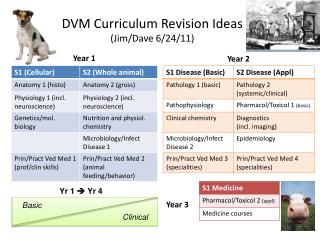
Course using PBL DVM Curriculum Overview Veterinary Practice Course Clinics Group A * Clinics Group B Summer Fall Winter Anatomy Cell Biology and Genetics Distribution Courses Physiology Pathology Yr. 1 Veterin Physical Exam General Pathology Ethics & Animal Care Neuro- anatomy Clinical Communication Vacation, optional Introductory clinical rotations, summer programs Physiology & Pathology Microbiology, Immunology, Epidemiology Distribution Courses Medicine & Surgery Yr. 2 Public Health & Preventive Medicine Clinical Procedures Vacation, optional Introductory clinical rotations, summer programs Medicine & Surgery Clinical Rotations Distribution Courses Clinical Rotations Yr. 3 Clinical Rotations Distribution Courses Professional Development Clinical Rotations Clinical Rotations Clinical Rotations Distribution Courses Yr. 4 Distribution Courses Clinical Rotations Each student has at least 46-48 weeks of clinical rotations with 3 free blocks. Each free block lasts 2-3 weeks and can be used for vacation, extra clinical experience, career exploration or job interviews. *A small number of students have a full semester of distribution courses either their 3rd or 4th year.