The Diverse Value of Ecosystems: Understanding Perspectives on Biodiversity Conservation
Different people assign varying values to ecosystems, influencing biodiversity conservation approaches. This discussion explores the importance of preserving habitats and species, focusing on the rainforest's economic, ecological, and aesthetic contributions. It examines the ecosystem services provided by rainforests, including abiotic factors like soil and climate, as well as societal benefits like education and recreation. The roles of intergovernmental and non-governmental organizations in environmental efforts are compared, highlighting their distinct approaches to advocacy and enforcement.

The Diverse Value of Ecosystems: Understanding Perspectives on Biodiversity Conservation
E N D
Presentation Transcript
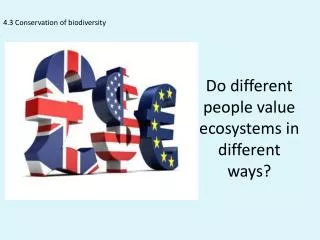
Do different people value ecosystems in different ways? 4.3 Conservation of biodiversity
4.3 Conservation of biodiversity Discussion: Why should we preserve habitats and species?
The value of the rainforest Goods from RF: what are they? Ecosystem ‘services’: what services does the RF ecosystem provide?
Ecosystem services: abiotic factors in the RF system Soil Water Temperature/weather pattern/climate Carbon store Atmosphere
And the aesthetically pleasing value of the forest • Does that have a value?
State the arguments for preserving species and habitats.Include - Economic values of the rainforest: Other values: RF services: Abiotic, biotic - biodiversity Science Education Genetic diversity Recreation Aesthetic value Human rights Ethical reasons
Compare and contrast the role and activities of intergovernmental and non-governmental organizations in preserving and restoring ecosystems and biodiversity.
Conservation organisations GOs NGOs e.g. Greenpeace, WWF e.g. UNEP, IUCN Non-governmental organization Intergovernmental organization Bodies established through international agreements to protect the environment Not run by, funded by or influenced by governments of any country
Mix and match: Media • Advertise on popular channels • Professional media officers prepare statements • Leaflets and events • Informative videos released
Mix and match: Speed of response • Independent and make own decisions so response can be rapid • Many countries have to come to a consensus so fairly slow
Mix and match: Diplomatic constraints • Generally unaffected by politics • Have to consult lawyers and other countries • Disagreements can cause serious constraints • Activities may be illegal although this is discouraged
Mix and match: Political influence • No direct political influence but may have had effect on getting green issues on political agendas • Direct access to governments of many countries so great political influence
Mix and match: Enforceability • Rely on public pressure; no power to enforce laws • International agreements and laws
Research and plot: UNEP, IUCN, WWF and Greenpeace Governmental Radical Conservative Field
What is the IUCN? • Draw a timeline to show its history. • What are the Red data Books and the Red List? • And remind me of the factors that determine the conservation status of a species…