
SlideServe
Menu
Préférences
© SlideServe · v2026

Ludwig van Beethoven

dillan avatar
10 diapositives · 860 Views · Jul 24, 2014

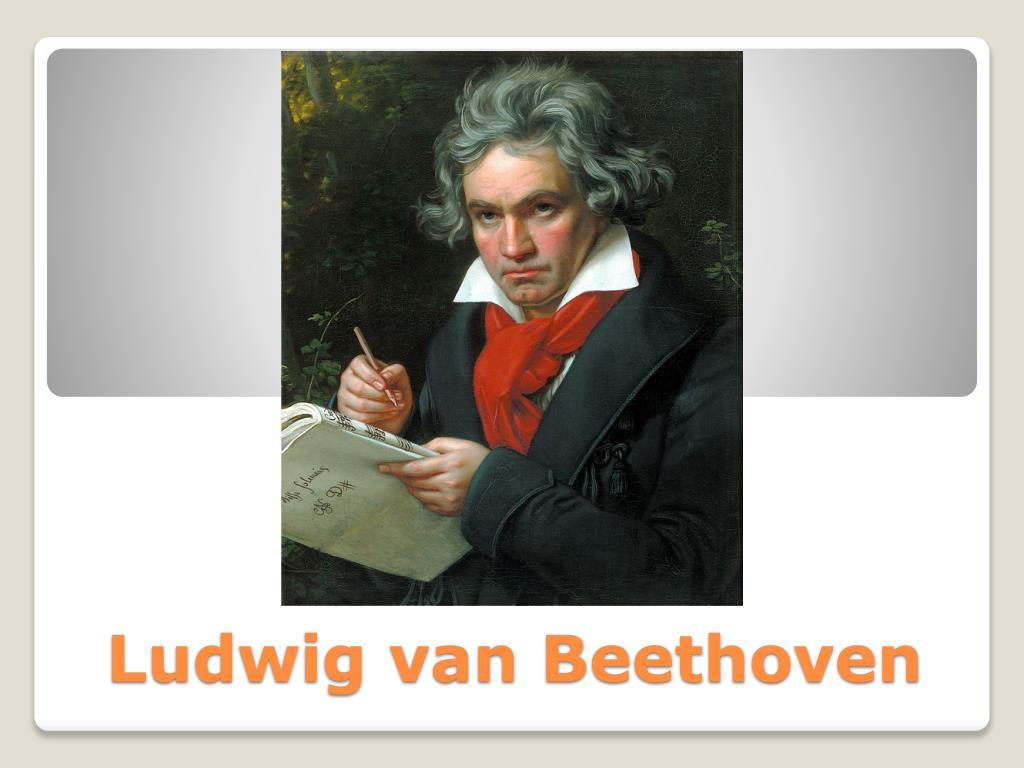
Ludwig van Beethoven. Modern Impressions:. Impressions of Beethoven’s Contemporaries:. Carl Czerny. Christian Gottlob Neefe. Mozart. Bonn, Germany: December 17, 1770- March 26, 1827 Composer and Pianist Between the Classical and Romantic eras
Ludwig van Beethoven - slide 1
01 / 10Ludwig van Beethoven
1 / 17

Télécharger la présentation

Ludwig van Beethoven
Une image / un lien ci-dessous est fourni (tel quel) pour télécharger la présentation

Politique de téléchargement : le contenu du site vous est fourni TEL QUEL pour votre information et votre usage personnel ; il ne peut être vendu, concédé sous licence ni partagé sur d’autres sites sans l’accord de son auteur.Le contenu vous est fourni TEL QUEL, pour votre information et votre usage personnel uniquement. Téléchargez la présentation en cliquant sur ce lien. Lors du téléchargement, si vous ne parvenez pas à télécharger une présentation, l’éditeur a peut-être supprimé le fichier de son serveur.Pendant le téléchargement, si vous ne parvenez pas à obtenir une présentation, le fichier a peut-être été supprimé par l’éditeur.

F I N

Plus de contenu associé

Transcription de la présentation
  1. Ludwig van Beethoven

  2. Modern Impressions:

  3. Impressions of Beethoven’s Contemporaries: Carl Czerny Christian GottlobNeefe Mozart

  4. Bonn, Germany: December 17, 1770- March 26, 1827 • Composer and Pianist • Between the Classical and Romantic eras • Major Works: 9 symphonies, 5 concertos for piano, 32 piano sonatas, 16 string quartets, 1 opera (Fidelio), 1 mass (Missasolemnis), etc. • Teachers: Father, Johann van Beethoven and Christian GottlobNeefe • Child prodigy? Dispute about age

  5. Highlights: • 1781: Starts lessons with Neefe in Bonn • 1782: First publication--Piano Variations on a March by Dressler • 1787: Vienna and Mozart • 1792: Vienna and Haydn • 1795: First Public Concert: Burgtheater in Vienna---he plays the B-flat Major Piano Concerto (No. 2) • 1796: Travels with patron Prince Lichnowsky to Prague, Dresden, Leipzig, and on to Berlin (performances) • 1799:Famous Piano Duel • 1800: First Concert of own music in the Hoftheater • 1818: Nephew comes to live with him; use of conversation notebooks • 1824: Premiere of Ninth Symphony

  6. Beethoven as a composer • Improvising at Piano and Composing in the sketches • Piano duel 1799 (Joseph Wölffl) • Pocket Sketchbooks • Conversation Books

  7. Ideas of Periodization and Maturity • Early Years • First Maturity (1792-1802) • Middle Period (“Heroic”) • Second Maturity (1802-1812) • “Late” Beethoven • Final Maturity (1813-1827) • Composer Narratives • Crisis and creativity • Deafness

  8. Beethoven’s Fifth Symphony • Symphony No.5inC Minor, op. 67 • Composedin 1804–1808 • Four-movement form • E. T. A. Hoffman wrote a famous review of the symphony where he described it as "one of the mostimportant works of the time." • Vienna, Theater an der Wien, 1808

  9. Sonata Form: • (Introduction) • Exposition • Development • Recapitulation • Coda • http://www.youtube.com/watch?v=rRgXUFnfKIY Short-short-short-Long motif

  10. Discussion Questions: • 1) What is the meaning of the opening motif? • Can we associate it with biography? • Fate knocking at the door (Schindler) • Secret? • Struggle? (polar harmonies) • Bitter lamenting? • Fear and Horror? • Variety? • Can we hear “Beethoven” in this work? • Narratives of Crisis and Triumph • Onset of hearing loss / Deafness? • Interpretations change throughout history