Transport in Plants
170 likes | 337 Vues
This overview explores the fundamental transport mechanisms at the cellular level in plants, including passive and active transport, facilitated diffusion, and proton pumps. We discuss water potential (ψ), its components, and the effects of solute concentration and pressure on potential. The three compartments of vacuolated cells, transport pathways like apoplastic and symplastic routes, and the role of guard cells in gas exchange are also detailed. This comprehensive approach highlights how plants efficiently manage water and nutrient transport, including the vital processes of transpiration and phloem transport.


Transport in Plants
E N D
Presentation Transcript
Transport in Plants AP Biology Crosby High School
Transport at the Cellular Level • Overview of transport • Passive • Facilitated diffusion • Selective channels • Active • Proton pumps • K+ enters cells • Cotransport • NO3- and Sugar
Differences in Water Potential • Water Potential (ψ) • Ψ = ψs + ψp • Measured in MPa • Effect of Solute • As solute concentration increases, potential decreases • Effect of Physical pressure • As Pressure increases, potential increases
Vacuolated Plant Cells have 3 Compartments • Compartments • Cell wall • Cytosol • Vacuole • Paths of transport • Apoplastic • Symplastic • Transmembrane
Transport in Plants • Within tissue and organ • Apoplastic and Symplastic transport • Through plant • Bulk flow • Sieve-tube: Hydrostatic pressure pushes sap • Xylem: Transpiration creates tension
Absorption of Water by Roots • Mycorrhizae • Fungi and Plant root • Endodermis is selective sentry • Casparian Strip • Symplastic bypasses Casparian Strip • Apoplastic must enter cell to get around
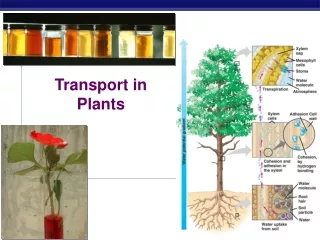
Transport of Xylem Sap • Pushing: root pressure • Accumulation of minerals at night draws in H2O • Guttation • Pulling: transpiration-cohesion-tension • Transpiration pull • Cohesion pulls water • Adhesion fights gravity
Guard Cells • Turgid: buckle out and open • Flaccid: Relax and close • K+ changes concentration and alters water potential • Cues for Stomata opening • Light • CO2 depletion • Circadian Rhythms
Phloem Transport • Sugar source • Sugar is produced • Sugar sink • Sugar is used or stored • Loading and Unloading • Loading requires active transport • Unloading is passive