Understanding Freezing and Hibernation: Properties, Antifreeze, and Biological Adaptations
50 likes | 168 Vues
This article explores the physical properties of freezing and hibernation. It discusses how pure water freezes at 0°C and how adding substances like NaCl can lower the freezing point, which is useful for de-icing roads. We also delve into the fascinating discovery of antifreeze proteins in snow fleas that protect against freezing and may have applications in organ preservation and plant frost resistance. Additionally, the physiological changes during animal hibernation are examined, highlighting potential medical benefits for organ transplants and trauma patients.


Understanding Freezing and Hibernation: Properties, Antifreeze, and Biological Adaptations
E N D
Presentation Transcript
From Freezing to Hibernation Physical Property: Freezing Antifreeze Hibernation
Water • Pure water freezes at 0 oC. • Freezing Point Lowering (phys prop) • 29.2 g NaCl (table salt) in 1 kg water freezes at -1.85 oC. • Apply salt (NaCl, CaCl2) or CMA to icy roads • http://www.usroads.com/journals/p/rmj/9712/rm971202.htm • Add antifreeze to car radiator water to lower FP to -50 oC
Antifreeze Protein in Snow Fleas • Scientists discovered a protein in snow fleas which protect them against freezing. • If this protein can be isolated, it might be used to • inhibit ice growth by about 6 oC. • increase frost resistance in plants • Increase storage time of organs for transplant • http://www.physorg.com/news7456.html
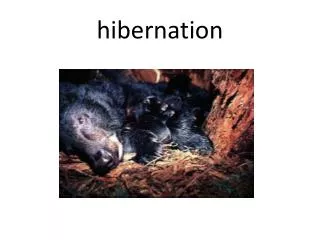
Hibernation • When animals hibernate, their body temp, heart rate and metabolism decrease dramatically. This allows them to go for long periods of time without food and water. They are in a state called “torpor”. • Potential benefits for organ transplants, trauma survivors, surgical patients. • http://www.usatoday.com/tech/science/discoveries/2006-01-23-hibernation_x.htm • http://www.d.umn.edu/biology/faculty/Andrews_page.htm