Analysis of Isoform Variability and Splice Patterns Across Populations
70 likes | 192 Vues
This study examines the diversity of isoforms and their splice-delta patterns across various populations. We analyze the differences in splicing from major expressed splice patterns, noting key characteristics like the farStart (spliced reads starting before the first exon) and farEnd (spliced reads extending beyond the last exon). Multiple splice junction categories are identified, revealing significant patterns, including steep decreases in isoform presence and flat decreases at splice sites. This research enhances our understanding of alternative splicing and its implications in gene expression.


Analysis of Isoform Variability and Splice Patterns Across Populations
E N D
Presentation Transcript
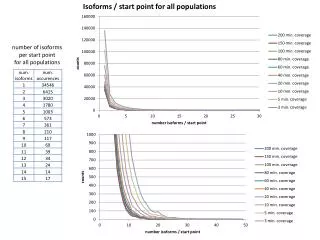
Isoforms / startpointfor all populations numberofisoforms per startpoint for all populations
splice-deltas (i.e. difference [in bp] from the major expressed splice-pattern)
farStart: spliced read that starts before the first exon farEnd: spliced read that extends beyond the last exon a splice-junction may be in multiple categories