Download

1 / 5
50 likes | 156 Vues
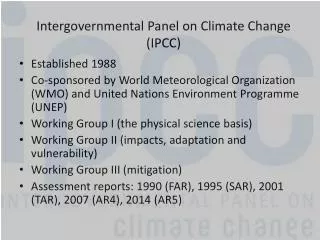
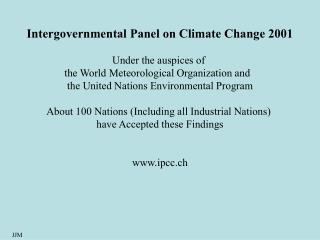
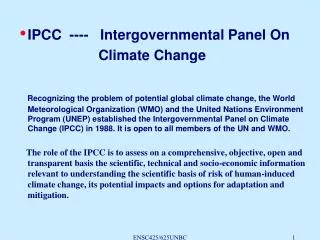
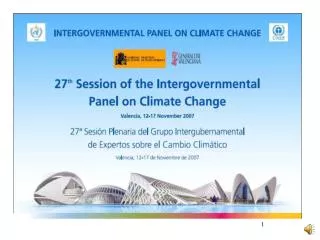
The Intergovernmental Panel on Climate Change (IPCC), established in 1988 by the World Meteorological Organization and the United Nations Environmental Program, serves to assess the scientific basis of human-induced climate change, its risks, potential impacts, and mitigation strategies. The IPCC aims for neutrality in its reports, focusing on comprehensive, objective evaluations of scientific, technical, and socio-economic data. Its notable assessment reports, released in 1990, 1995, 2001, 2007, and 2013, have involved extensive contributions from thousands of experts.

E N D
Intergovernmental Panel of Climate Change • formed in 1988 by World Meteorological Organization and the • United National Environmental Program • IPCC’s job: • “...to assess on a comprehensive, objective, open and transparent • basis the scientific, technical and socio-economic information relevant • to understanding the scientific basis of risk of human-induced climate • change, its potential impacts and options for adaptation and mitigation. • IPCC reports should be neutral with respect to policy, although they • may need to deal objectively with scientific, technical and socio- • economic factors relevant to the application of particular policies.” • Assessment reports in: • 1990, 1995, 2001, 2007, and 2013
831 lead authors 10,000+ comments
IPCC pros? IPCC cons?