Exploring Unique Vocabulary: Imprecation, Impugn, Incorrigible, Jocular, Largess
Dive into the meanings and usage of five intriguing English words: imprecation, impugn, incorrigible, jocular, and largess. Discover how "imprecation" refers to a spoken curse, while "impugn" involves challenging the truth of a statement. Learn about "incorrigible," describing someone beyond reform, and "jocular," which characterizes a humorous demeanor. Lastly, explore "largess," the act of giving generously. Each term offers insight into human behavior and language richness, enhancing your vocabulary in fun and engaging ways.

Exploring Unique Vocabulary: Imprecation, Impugn, Incorrigible, Jocular, Largess
E N D
Presentation Transcript
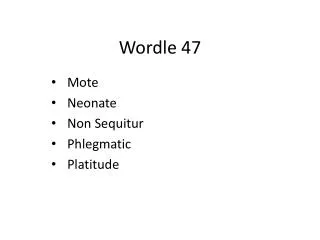
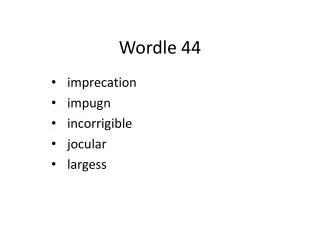
Wordle44 imprecation impugn incorrigible jocular largess
imprecation • im·pre·ca·tion/ˌ • Noun: A spoken curse. • Synonyms: • curse - malediction - damnation - oath - execration • Tom got in trouble for the imprecation he said during class.
impugn • im·pugn • Verb: • Dispute the truth, validity, or honesty of (a statement or motive); challenge; call into question. • Synonyms: • oppugn - challenge - contest - dispute - question • The reporter impugned the politician’s claim that he had not taken money from the people in the town.
incorrigible • in·cor·ri·gi·ble • Adjective: • (of a person or their tendencies) Not able to be corrected, improved, or reformed. • Synonyms: • irredeemable - unimprovable - irreparable - irreclaimable • The criminal was deemed incorrigible. He could not be reformed.
jocular • joc·u·lar • Adjective: • Fond of or characterized by joking; humorous or playful. • Synonyms: • jocose - humorous - facetious - playful - waggish - comic • My uncle is a jocular man.
largess • Noun: a gift or money given (as for service or out of benevolence); usually given ostentatiously. • Thanks to the king’s largess, all the poor people had enough food to eat.