
Uploaded by
dragon
0 SLIDES
198 VUES
10LIKES
Progressive Movement
DESCRIPTION
Progressive Movement. PG. 30 Notes Pg. 31. Vocabulary. Review to this point. Civil War. 1861-1865. Reconstruction Amendments (1865-1877). 13 th - Outlawed Slavery 14 th - Defines Citizenship (ex-slaves now citizens) Equal protection under the law for states.
Download

1 / 0
Télécharger la présentation 
Progressive Movement
An Image/Link below is provided (as is) to download presentation
Download Policy: Content on the Website is provided to you AS IS for your information and personal use and may not be sold / licensed / shared on other websites without getting consent from its author.
Content is provided to you AS IS for your information and personal use only.
Download presentation by click this link.
While downloading, if for some reason you are not able to download a presentation, the publisher may have deleted the file from their server.
During download, if you can't get a presentation, the file might be deleted by the publisher.
E N D
Presentation Transcript
-
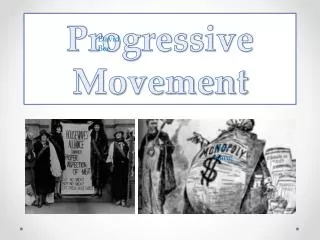
Progressive Movement
PG. 30 Notes Pg. 31. Vocabulary -
Review to this point
- Civil War 1861-1865
- Reconstruction Amendments(1865-1877) 13th - Outlawed Slavery 14th - Defines Citizenship (ex-slaves now citizens) Equal protection under the law for states. Bill of rights applied to states. 15th Voting rights for ex-slaves who are men
-
The Progressive Era & the End of Laissez-Faire America
- America Industrializes / Gilded Age Technological innovations Bessemer Process Steel Electricity Thomas Edison Factory work at night Railroads Transcendental Growth of West National Markets Corporations A charted company recognized by law as a ‘person’ Captions of Industry Robber Barons Andrew Carnegie Steel John D. Rockefeller Oil Vanderbilt Railroads Monopoly Trust A company that has complete control over a product or service
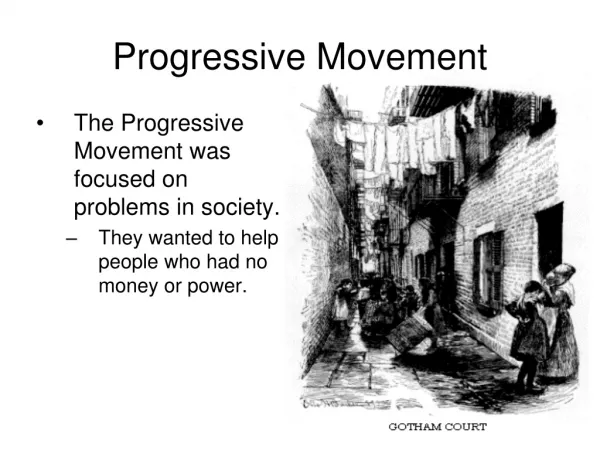
- I. Muckrakers Expose the Evils of Industrial Capitalism Jacob Riis and New York’s Poor Lincoln Steffens Shame of the Cities
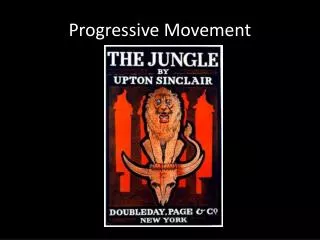
- B. Upton Sinclair and America’s Meat
- C. Ida Tarbell and Standard Oil
- Ida B. Wells Reforms on lynching
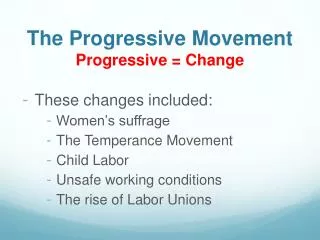
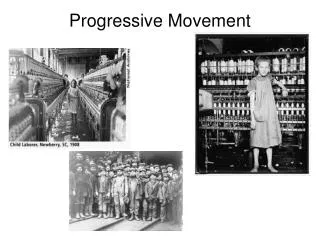
- II. Solution #1: Keep Capitalism, But Protect the People A. Protecting Children and Women Workers: Child Labor Laws & Muller v. Oregon
- Labor Child Labor Laws Unions Knights of Labor American Federation of Labor Samuel Gompers Closed shops Only union workers Haymarket Affair Riot Chicago Bomb exploded Labor leaders blamed 7 police men killed
- Gospel of Wealth Idea that Captions of industry should give some of there profits to help society Philanthropy Give away money to help society Libraries Museums Schools
- Social Gospel Social Reforms Christian Duty to help others Jane Addams Settlement Houses W.E.B DuBois NAACP Booker T. Washington YMCA Anti- Defamation League
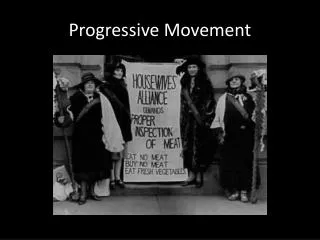
- B. Protecting Consumers: Meat Inspection Act and Pure Food & Drug Act
- C. Protecting Small Businesses: The Elkins, Hepburn and Clayton Anti-Trust Acts
- Laws against Unfair Business Laissez-faire Belief that the Government should not interfere with business Only to protect and enforce contracts Tariffs to protect trade Interstate Commerce Act (1877) Congress can regulate commerce between states. Railroads 1st time US Government stepped in to regulate business Sherman Anti – Act (1890) Stop monopolies in engaging in unfair practices
- Progressive Presidents & Trust Roosevelt Square Deal Revised the use of the Sherman Anti- Trust Act “trust buster’ Good trust Agree to regulation Bad trust Not agree to regulation then shut down Protect the consumer health and prevent false advertising Meat Inspection Act (1906) Pure Food and Drug (1906) Taft More trust busting Wilson New Freedom Clayton Anti – Trust (1914) All trusts are bad. Underwood Tariff (1913) Lowered Tariff Federal Reserve Act (1913) Reformed banking system 12 ‘bankers banks’ Regulate money supply Federal Trade Commission (1913) Regulate against unfair business practice Child Labor Act (1916) National Park Service
- III. Solution #2: More Democracy, More Power to the People
- 16th amendment Graduated income tax Redistributes wealth from top income earners (I am fined on April 16th if I don’t get my taxes in on time)
- B. Direct Election of Senators: 17th Amendment Original Constitution (1787): The Senate of the United States shall be composed of two Senators from each State, chosen by the Legislature thereof, for six Years; and each Senator shall have one Vote. 17th Amendment: The Senate of the United States shall be composed of two Senators from each State, elected by the people thereof, for six years…. More people participate in direct democracy. (“I can vote for my senator when I am 18…I wish it was 17)
- 18th amendment Prohibits the sale of alcohol (Back in the day the drinking age was 18 now it is 21) 21st amendment repealed the 18th
- A. Women Win the Right to Vote: The 19th Amendment (18, 19, 20) I can vote when I’m 18 because of the 19th amendment passed in 1920!
- C. Voting Privately: The Australian Ballot
- D. Recalls, Referenda, and Initiatives
- IV. The Results A. Political: Little Long Term Impact
- Notes/vocabulary http://www.youtube.com/watch?v=52E4Rm3_k7I
- Frayer Model Vocabulary Third Parties Muckrakers
- Individual boxes
- Presentation
- Quiz

More Related