Seizure Complications in a Middle-Aged Smoker: Diagnosis and Treatment Approach
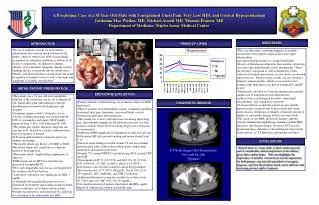
A 43-year-old Caucasian male with seizure history, COPD, gum infection, and smoking addiction presents with new seizure attacks. Initial tests reveal bacterial presence, inflammation, and clotting abnormalities. Treatment includes surgery, antibiotics, antiepileptic drugs, and blood thinners. Follow-up interventions involve further testing and cardiac catheterization for PFO closure.

Seizure Complications in a Middle-Aged Smoker: Diagnosis and Treatment Approach
E N D
Presentation Transcript
Initial Presentation • 43-year-old Caucasian male suffered a seizure 20 days ago. He also had a history of seizure 2 months before, which he did not seek medical attention. • He also experience headache, nausea, weakness/numbness of the arm, and poor dental health.
Hx • Has been diagnosed to have COPD for the past 10 years (currently uses salbutamol to ease the symptoms). • Heavy nicotine addiction (70 pack/year)
Hx Cont’d Family history: • Both parents have heart conditions and mental illnesses.
Hx Cont’d Social/Occupational Hx: • Farmer • Sedentary lifestyle • Still smoking but less
Physical Examinations • BMI: 27 • BP: 123/72 mmHg • HR: 88 beats/min • RR: 15/min • Temp: 38.2 °C
More examination • Purulent gingival drainage and several septic teeth. • Glasgow Coma Scale of 15/15 • Normal PERLLA • Unimpaired cranial nerves and motor-sensor functions • Intact tendon reflexes
DDx • What test should we order? • What organs should we check for?
Smear Test • Positive result of patient’s gingival smear test, indicating the presence of Staphylococcus Haemolyticus
Blood Test • Blood test shows elevated white count, serum C-reactive protein, and procalcitonin • Slightly abnormal blood clot test
Diagnosis ???
Treatment ???
Treatment Cont’d • Surgical removal • Phenytoin • Antibiotics: meropenem, metronidazole, and teicoplanin
Follow up • Patient’s condition has improved dramatically. Blood test shows no inflammation. However, he suffered from another seizure attack 2 days ago.
DDx • What did we miss? Or was it a newly developed condition? • What test should we order?
Diagnosis ???
Treatment ???
Treatment Cont’d • Blood thinning medication: heparin and warfarin • Closure of PFO via cardiac catheterization