Download
1 / 13
130 likes | 247 Vues
This document explores the various personal concerns related to the fear of developing dementia, including cognitive functioning aspects like memory, language, visuospatial skills, and reasoning. It discusses the emotional response to perceived threats of dementia, the societal implications, and the burdens of anticipated decline. Key fears include loss of decision-making abilities and social relationships, as well as worries about becoming a burden. It emphasizes the need for communication, planning, and support for individuals facing these fears.

E N D
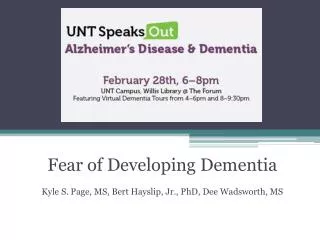
Fear of Developing Dementia Kyle S. Page, MS, Bert Hayslip, Jr., PhD, Dee Wadsworth, MS
Personal Concerns • Take a moment to reflect on what concerns you have about developing dementia.
Cognitive Functioning & Dementia • Memory functioning • Language • Visuospatial • Attention / Concentration • Reasoning / Abstraction • Planning / Judgment • “Diagnosis of exclusion”
Multidimensional Impact • Individual • Family • Social Networks • Societal $76.8 Billion
Kessler et al. (2012) Dementia Worry • “Emotional response to the perceived threat of developing dementia” • Health Worry • Aging Anxiety • Concerns related to decline in health, physical functioning, well-being, etc.
Kessler et al. (2012) Dementia Worry • Threat to Human Identity • Awareness • “Symbolic” Self • Shared Reality • Stigma? • Would you be treated differently?
Cutler & Hodgson (1996) Anticipatory Dementia • Subjective concern of decline in memory functioning • Fear that this decline is the early stage of dementia (or sign of the future) • The role of family history
Fear of Dementia • Personal Concerns • Most Endorsed Concerns: • Loss of Decision-Making Abilities • Loss of Relationships • Loss of Language/Communication Abilities • Decline in Physical/Mental/Emotional Health • Being a Burden
Different Types of Fear • Fear of Becoming a Burden • “I will be an emotional burden to others” • Fear of the Impact on the Self • “I will no longer be able to remember by childhood” • Anticipatory Fears • “I have at risk for developing Alzheimer’s disease”
You Have the Fear, Now What? • Where do you go for information? • Where do you go for support? • What do you try to do?
What this Means for You • Confrontation with Personal Aging • Importance of Communication/Planning • Importance of Supporting Others
Contact Information • Kyle Page • kylepage@my.unt.edu • Bert Hayslip, Jr. • hayslipb@unt.edu