Enhancing E-Learning with Audio Technology: Best Practices and New Releases
Discover the pivotal role of audio technology in e-learning, focusing on key elements such as portability, global connectivity, and sound reproduction. Explore new releases like Komplete Audio 6 and Roland’s Jupiter-80, highlighting their seamless integration for effective teaching. This guide emphasizes the importance of synchronized audio and visuals, appropriate use of narration, and maintaining an informal tone. Learn how audio can enhance the learning experience, create emotional cues, and make information more memorable for learners.

Enhancing E-Learning with Audio Technology: Best Practices and New Releases
E N D
Presentation Transcript
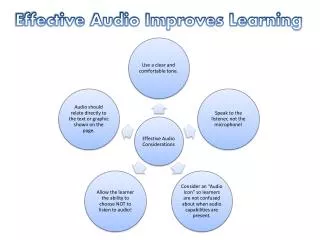
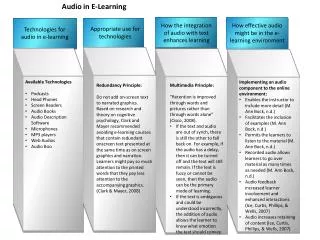
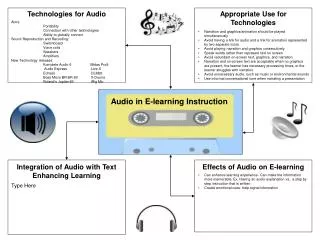
Technologies for Audio Appropriate Use for Technologies Aims: Portability Connection with other technologies Ability to globally connect Sound Reproduction and Recording: Switchboard Voice coils Speakers Amplifiers New Technology releases: Komplete Audio 6 Midas Pro9 Audio Express Live X Echoes DLM26 Boss Micro BR BR-80 V-Drums Roland’s Jupiter-80 iRig Mic • Narration and graphics/animation should be played simultaneously • Avoid having a link for audio and a link for animation represented by two separate icons • Avoid playing narration and graphics consecutively • Speak words rather than represent text on screen • Avoid redundant on-screen text, graphics, and narration • Narration and on-screen text are acceptable when no graphics are present, the learner has necessary processing times, or the learner struggles with narration • Avoid unnecessary audio, such as music or environmental sounds • Use informal conversational tone when narrating a presentation Audio in E-learning Instruction Integration of Audio with Text Enhancing Learning Effects of Audio on E-learning • Can enhance learning experience- Can make the information more memorable. Ex. Having an audio explanation vs.. a step by step instruction that is written • Create emotional cues- help signal information Type Here