

SlideServe
Menu
Préférences
© SlideServe · v2026

Ch. 11

dugan avatar
21 diapositives · 402 Views · Jul 29, 2014

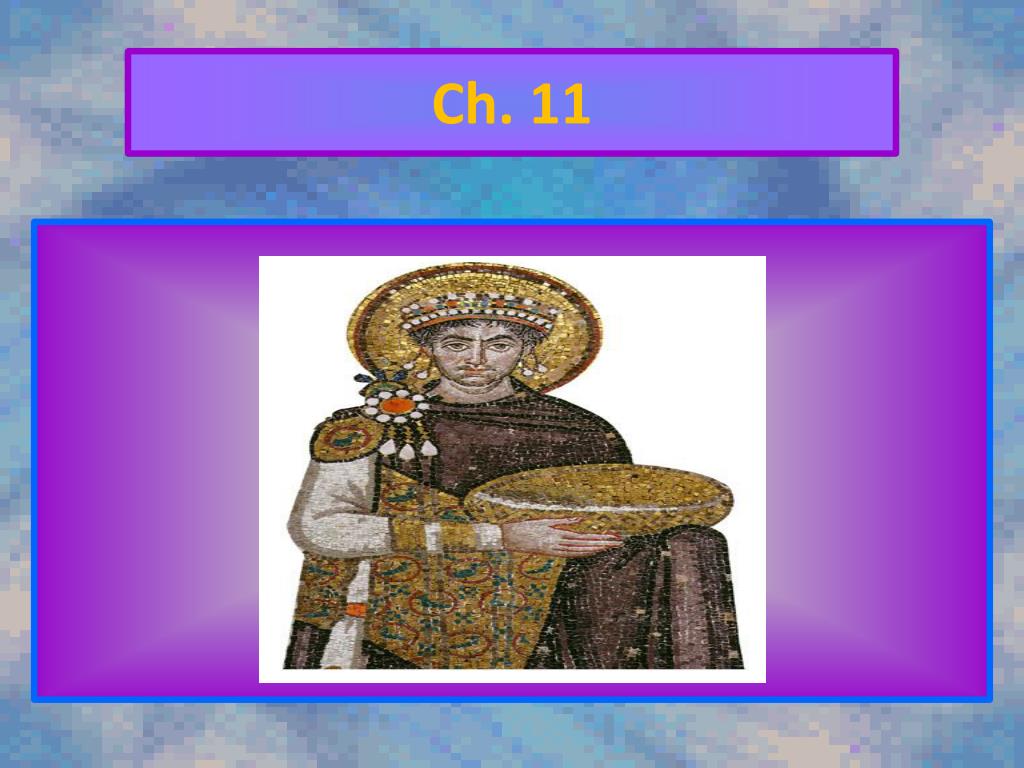
Ch. 11. Justinian Code. The Uniform code created by a panel of 400 legal experts; it served the Byzantine Empire for 900 years. Hagia Sophia. The Church of “Holy Wisdom” built by Justinian in Constantinople; considered the crowning glory of his reign . Patriarch.
Ch. 11 - slide 1
01 / 21Ch. 11
1 / 17

Télécharger la présentation

Ch. 11
Une image / un lien ci-dessous est fourni (tel quel) pour télécharger la présentation

Politique de téléchargement : le contenu du site vous est fourni TEL QUEL pour votre information et votre usage personnel ; il ne peut être vendu, concédé sous licence ni partagé sur d’autres sites sans l’accord de son auteur.Le contenu vous est fourni TEL QUEL, pour votre information et votre usage personnel uniquement. Téléchargez la présentation en cliquant sur ce lien. Lors du téléchargement, si vous ne parvenez pas à télécharger une présentation, l’éditeur a peut-être supprimé le fichier de son serveur.Pendant le téléchargement, si vous ne parvenez pas à obtenir une présentation, le fichier a peut-être été supprimé par l’éditeur.

F I N

Plus de contenu associé

Transcription de la présentation
  1. Ch. 11

  2. Justinian Code The Uniform code created by a panel of 400 legal experts; it served the Byzantine Empire for 900 years.

  3. Hagia Sophia The Church of “Holy Wisdom” built by Justinian in Constantinople; considered the crowning glory of his reign.

  4. Patriarch The term for the leading bishop of Eastern Christianity.

  5. Icons A religious image used by Eastern Christians to aid in their devotions.

  6. Slavs People of the forests north of the Black Sea who were influenced by Greek Byzantine missionaries and traders.

  7. Alexander Nevsky The prince and military hero of Novgorod; he advised fellow Russian princes to cooperate with the Mongols.

  8. Seljuks A migrating Turkish group that converted to Islam and captured Baghdad, eventually occupying most of Anatolia.

  9. Malik Shah The Seljuk sultan who built a great empire and took pride in supporting Persian artists and architects.

  10. Excommunication The declaration that casts a person out of the Christian Church.

  11. Cyrillic The Slavic alphabet created by saints Cyrillic and Methodius in the 9th century.

  12. Vladimir The ruler of Kiev who made his subjects join him in converting to Byzantine Christianity.

  13. Yaroslav the Wise He ruled Kiev (1019-1054) forged trading alliances with Western Europe, and created a legal code.

  14. Ivan III The Russian prince of Moscow who openly challenged the Mongols and liberated Russia in a bloodless standoff.

  15. Czar A Russian ruler or emperor, from the Russian version of the word “caesar”

  16. Vizier A prime minister who served the Seljuk sultans.

  17. Omar Khayyam Author, under the patronage of Malik Shah, of a famous set of poems called the Rubaiyat.

  18. Hippodrome A stadium in Constantinople that could hold 60,000 spectators to watch chariot races and performance acts.

  19. Mese The “Middle Way” or main street that ran through Constantinople; it was lined with merchants’ stalls.

  20. Empress Theodora The most powerful woman in Byzantinehistory, she passed laws and advised her husband, Justinian.

  21. Khanate of the Golden Horde The Mongol empire that, after the fall of Kiev, ruled all of southern Russia for 200 years.