Download
1 / 18
210 likes | 350 Vues
Proper pesticide storage is essential for effective business management and safety. This guide emphasizes the importance of designated storage areas that are separate, secure, and well-identified to protect the environment and the health of family and pets. Ensuring moisture and temperature control, as well as having spill management tools, is crucial. Labels must be clear and legible, and regulations dictate safe separation from fertilizers and animal feeds. By adhering to these guidelines, we can ensure safety and compliance while protecting our communities.

E N D
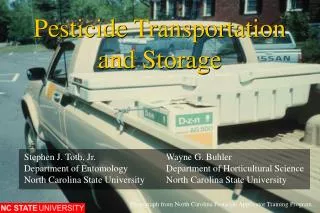
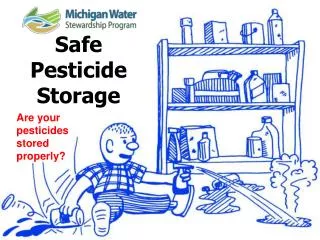
Pesticide Storage Systems
Why Planned Storage Areas? • Good Business Management • Safety & Protection • Secure & Easily Identified
Storage Areas Protect: • The environment • Family, friends and others
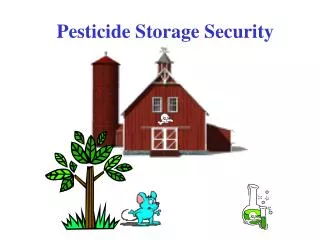
Storage Areas Should Be: • Separate building or cabinet • Well identified with signs
Reduce Contamination: • Never store by livestock or pet feed • Store pesticides away from fertilizer • Never store by household products • Store protective clothing separately
Storage Areas Should Be: • Secure and locked at all times
Storage Areas Should Include: • Temperature control • avoid freezing or • excessive heat • Storage for volatile products
Storage Areas Should Include: • Moisture controls • Separate areas for herbicides & insecticides
Storage Areas Should Provide: • Low runoff potential • Adequate lighting • Clean water source
Storage Areas Should Provide: • Non-porous flooring & shelving • Tools for spill management • Safety equipment
Emergency Situations: • Post emergency numbers • Identify storage area • Have building maps and product lists • easily accessible
Pesticide Containers: • Keep pesticides in original container • Keep label firmly • attached • Check for • damaged • containers
Labels: • Read for safety instructions • Read for storage instructions • Make sure labels are legible
State Storage Regulations: • Store pesticides separately from • Commercial fertilizer • Animal feeds • Bulk storage equivalent to • 55 gallons liquid • 100 net pounds dry matter
State Storage Regulations: • On-farm bulk storage exempt if • mobile containers are used • Non-mobile containers defined as • having fixed plumbing attached • and refill directly from a tank truck
Storing Pesticides Safely • Properly storing pesticides makes • good business sense. • Protects people • & animals • Protects the • environment
References: • Applying Pesticides Correctly • OSU Extension Bulletin 825-A • Pesticide User’s Guide • OSU Extension Bulletin 745 • On-Farm Agrichemical • Mixing/Loading Pad • OSU Extension FactSheet AEX-522-93
Pesticide Education Program Ohio State University ExtensionJoanne Kick-Raack, CoordinatorDeveloped by: Cindy Folck, Extension AssociateAcknowledgements and special thanks to:Applying Pesticides Correctly Bulletin – Ohio State Univ. ExtensionFarm *A* Syst Slides & Training ManualVirginia Tech Pesticide ProgramsPurdue Pesticide ProgramsSteve Foster, OSU Extension, Darke Co. Produced By: