Advanced Instrumentation for Alumoline Fuel Cells in Nissan GT-R: A Comparative Analysis
60 likes | 175 Vues
This paper presents an innovative approach to fuel cell instrumentation, integrating features from leading automotive technologies such as Nissan GT-R and Toyota Prius. Our design emphasizes lightweight, sturdy, and serviceable packaging constraints while providing an easy-to-read LCD GUI, ensuring optimal user experience even in daylight conditions. The focus on our patented Alumoline system demonstrates advancements over existing gasoline engine monitors. We analyze the state-of-the-art computer technologies and recommend implementations that enhance functionality, reliability, and aesthetics in fuel cell monitoring.


Advanced Instrumentation for Alumoline Fuel Cells in Nissan GT-R: A Comparative Analysis
E N D
Presentation Transcript
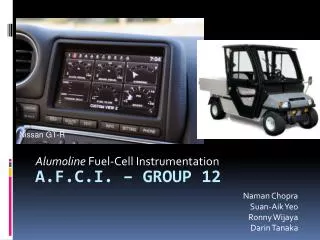
Naman Chopra Suan-AikYeo Ronny Wijaya Darin Tanaka Alumoline Fuel-Cell Instrumentation Nissan GT-R A.F.C.I. – Group 12
Packaging Constraints • Lightweight • Sturdy, long-lasting • Easily serviceable • LCD – Easily viewable, ergonomically placed • GUI – easily readable in daylight
Comparative Product # 1 • Nissan GT-R • State of the art computer • Incorporating some of its concepts in our design. • GT-R system monitors gasoline engine but ours monitor our patented “Alumoline” system.
Comparative Product # 2 • Toyota Prius • Visually appealing display/Colorful • Prius monitors Hybrid Synergy Drive (HSD) system and gives status of the system, and let the users know of anything unexpected.
4 SD Card Serial Port A.F.C.I. Port headers Sensor Headers