Download
1 / 19
190 likes | 340 Vues
This overview explores the ascension of Spain and England from the late 14th to mid-17th centuries. It highlights Ferdinand and Isabella's consolidation of Spain, the Golden Age of Spanish power through Conquistadors, Catholic expansion, and consequent challenges, such as inflation and the Spanish Armada’s failure. Simultaneously, England's transformation post-100 Years' War and War of Roses led to the consolidation of monarchical power under the Tudors and Stuarts, with significant religious upheaval fueling colonization and conflict.

E N D
Spain: 1337-1650 The First to be the Greatest
Ferdinand and Isabella create the nation = late 1400s • Ferdinand and Isabella marry – unites Castille and Aragon - 1469 • Defeated Muslims, united Spain - 1492 • Expelled Jews and Muslims • Holy Inquisition
Ferdinand and Isabella create a strong monarchy • Allied with townsfolk vs. nobles • Limited Cortes • Allied with Church
The Golden Age of Spain • Royal Family = Hapsburgs – Charles V – early 1500s, Philip II – 1556-1598 • 2 Driving Principles = Catholic Faith, Power
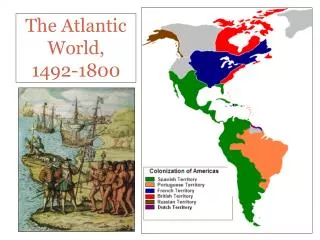
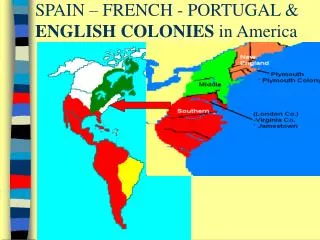
Making the country strong – Expansion and Colonization • Why? – Spread Catholic faith, and $= power (mercantilism) + gold and silver • Where? – Americas and Philippines • Also, acquired Portugal and her possessions
Spain on top 1550-1650, but… • Spanish Armada fails to take England, 1588 • Excessive gold and silver leads to inflation • Financing of wars (such as 30 Years’ War = 1618-1648) across Europe leads to debt • Dutch revolt in 1600s • Marrying of relatives leads to less capable offspring
Mercantilism… an aside • Mercantilism = • Favorable balance of trade = • What was the purpose of colonies?
England: 1337-1649 The rise of a nation, the failure of absolutism
Two Wars Make Monarchy Strong – 1. 100 Years’ War (1337-1453)
Consequences for England • No more distraction from fiefs in France after loss • Loyalty to nation, king increased during this war
2. War of Roses = 1455-1485 • House of Lancaster vs. House of York • At stake – rule of Jolly Old England
And the winner is… • Henry VII (1485-1509) of the Tudor family = House of Lancaster • War of the Roses left Tudors in control • Many nobles died in both wars
The Tudors and Stuarts grow royal power (1485-1649) • Major Tudor monarchs = Henry VIII (1509-1547) and Elizabeth I (1558-1603) • Major Stuarts = James I (1603-1625), Charles I (1625-1649)
Henry VIII and Anglican Schism • Henry VIII dumps Catholic Church, becomes head of the English Church • Ensuing monarchs play religious ping-pong
The Stuarts continued in their Anglican religion and persecuted those who were not Anglican • This led to many Englishmen fleeing to the New World – which enriched England
Religious issues leads to colonization and increased power: • Anglican
Obstacles to Royal Power • Tradition and Magna Carta in 1215 – limit kings’ power • Parliament (rich nobles) – controls $$ • Catholic Church • Nobles
Overcoming the obstacles • Proclaimed Divine Right of Kings (James I) • Raised money without Parliament • Dump Catholic Church, replace with king as head of Church of England (Anglican Church) • Buy off nobles with land from Catholic monasteries
Oops • But, Parliament tired of Charles I’s attempts to rule without them and…