SlideServe
Menu
Préférences
© SlideServe · v2026

Chapter 5 Tape Composition and Fundamental Concepts of Electronic Music

ebony avatar
8 diapositives · 247 Views · Aug 08, 2014

Chapter 5 Tape Composition and Fundamental Concepts of Electronic Music. Contents Seven Fundamental Traits of Electronic Music Tape Composition Methods and Techniques. Chapter 5 Tape Composition and Fundamental Concepts of Electronic Music.
Chapter 5 Tape Composition and Fundamental Concepts of Electronic Music - slide 1
01 / 8Chapter 5 Tape Composition and Fundamental Concepts of Electronic Music
1 / 17

Télécharger la présentation

Chapter 5 Tape Composition and Fundamental Concepts of Electronic Music
Une image / un lien ci-dessous est fourni (tel quel) pour télécharger la présentation

Politique de téléchargement : le contenu du site vous est fourni TEL QUEL pour votre information et votre usage personnel ; il ne peut être vendu, concédé sous licence ni partagé sur d’autres sites sans l’accord de son auteur.Le contenu vous est fourni TEL QUEL, pour votre information et votre usage personnel uniquement. Téléchargez la présentation en cliquant sur ce lien. Lors du téléchargement, si vous ne parvenez pas à télécharger une présentation, l’éditeur a peut-être supprimé le fichier de son serveur.Pendant le téléchargement, si vous ne parvenez pas à obtenir une présentation, le fichier a peut-être été supprimé par l’éditeur.

F I N

Plus de contenu associé

Transcription de la présentation
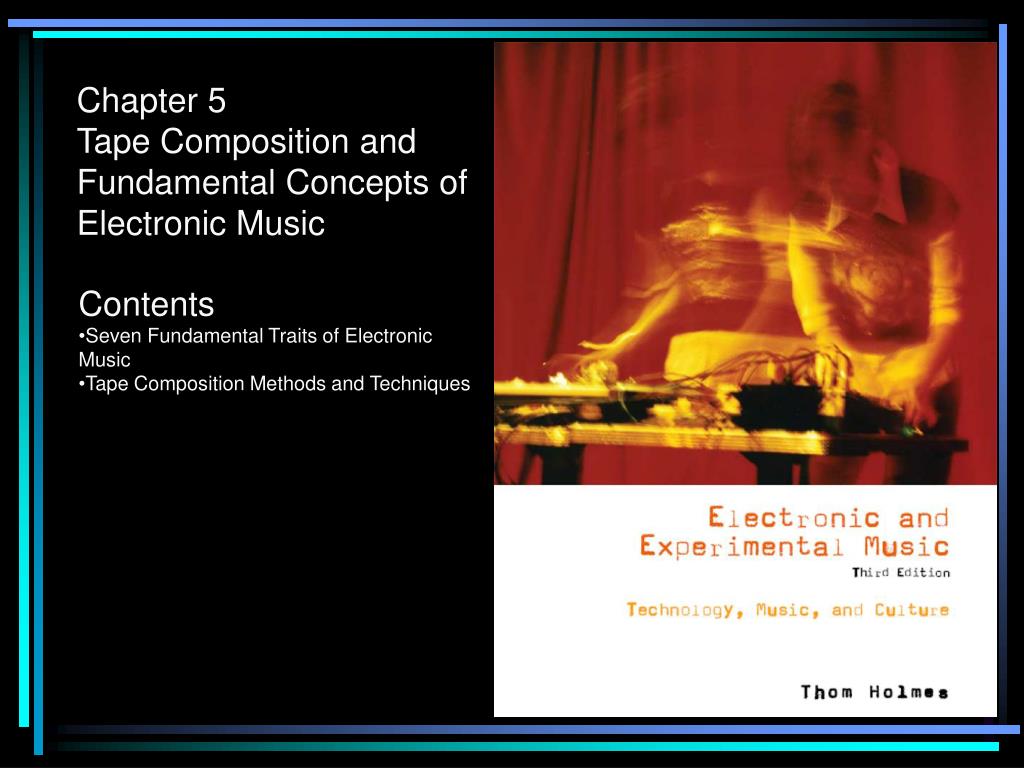
  1. Chapter 5 Tape Composition and Fundamental Concepts of Electronic Music • Contents • Seven Fundamental Traits of Electronic Music • Tape Composition Methods and Techniques

  2. Chapter 5 Tape Composition and Fundamental Concepts of Electronic Music • Many of the basic aesthetic concepts and artistic choices that were invented by early composers of tape music remain at the core of electronic music still being produced today. Chapter 5

  3. Chapter 5 Tape Composition and Fundamental Concepts of Electronic Music • The seven fundamental traits of electronic music are: • The sound resources available to electronic music are unlimited. • Electronic music can expand the perception of tonality. • Electronic music exists in a state of actualization. • Electronic music has a special relationship with the temporal nature of music. • In electronic music, sound itself becomes the material of composition. • Electronic music does not breathe—it is not affected by the limitations of human performance. • Electronic music often lacks a point of comparison with the natural world of sounds, providing a largely mental and imaginative experience. Chapter 5

  4. Chapter 5 Tape Composition and Fundamental Concepts of Electronic Music • Many modern practices and techniques found in modern electronic music had their origins in the classic tape studio. • Classic tape techniques that have successfully transferred to the tapeless digital domain include editing (cutting and pasting of sounds), tape echo, reverberation, sound loops, delay, reversal of sounds, and tape speed manipulation. Chapter 5

  5. Chapter 5

  6. Chapter 5

  7. Chapter 5

  8. Chapter 5