Understanding Satire in Jonathan Swift's "Gulliver's Travels"
Jonathan Swift's "Gulliver's Travels," published in 1726, presents a satirical examination of European government and religious differences through the journeys of Lemuel Gulliver. Set in the early 18th century, Swift questions the nature of corruption, using various societies like the diminutive Lilliputians and the giant Brobdingnagians to highlight human folly. With a blend of humor and cynicism, Swift critiques power dynamics and societal norms, ensuring the narrative remains poignant and relevant. Join us as we explore the themes, characters, and satirical elements of this timeless classic.
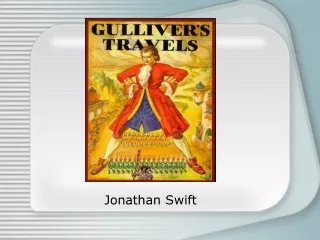

Understanding Satire in Jonathan Swift's "Gulliver's Travels"
E N D
Presentation Transcript
Important Facts to Remember • Setting - Early 18th Century • Themes: • Satirical view of European government and silly differences between religions • Raises the question: • Are men born corrupt or do they become corrupt? • Tone - gullible, satirical, naïve • At times bitter and cynical
Main Characters • Lemuel Gulliver • Narrator of novel • Middle-aged, middle class, British • Intelligent, well-educated • Naïve • Unaffectionate to wife [barely mentions her in novel]
Main Characters • Lilliputians • Inhabit Lilliput • Only 6 inches tall • Prone to conspiracies and jealousies • Emperor • Ruler of the Lilliputians • Despite small size, loves being in control, exercising his power, and his large palace
Main Characters • Brobdingnagians • Giants that inhabit Brobdingnag • Reasonable, gentle • Ignorant • The Queen • Sweet, kind • Humorous, witty
Main Characters • Yahoos • Dirty, hairy, primitive, but humanlike • Many different kinds • Blonde, redheaded, dark-haired • Servants of Houyhnhnms • Houyhnhnms • Horses • Live in peaceful, simple society • Rule with reason and truthfulness • Do not even have the word “lie” in their vocabulary
Plot Summary • First Journey to Lilliput • Gulliver finds himself shipwrecked • Bound up by Lilliputians • Inhabitants fighting with nearby country over the proper way to crack open eggs; from the little end (littlenders) or the big end (bigenders) • Gulliver aids them fight in war
Plot Summary • Second Journey to Brobdingnag • Gulliver sold and used as a slave, mostly used for entertainment purposes • Meets the Brobdingnagians • Discusses history and policies of his native country with the Queen
Plot Summary • Final Journey to the Country of the Houyhnhnms • Horses rule the deformed Yahoos • Gulliver banished from their society • Feel he is a threat to their civilization • Aware he has a resemblance to a Yahoo
THINK ABOUT IT! • We discussed, in detail, the meaning and some examples of satire. How does Swift satirize the government? Where does he satirize differing religions? Be able to provide examples. • How does Gulliver change as the story progresses? Cite direct examples to support your claim.
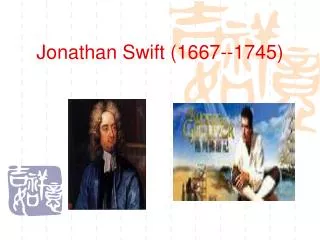
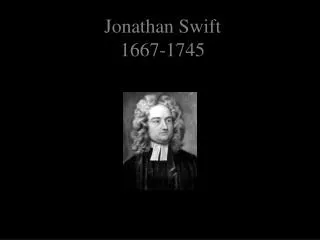
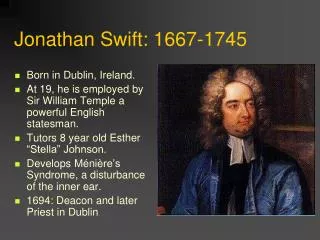
Background Information • Written by Jonathan Swift in 1726 • Born in Dublin, Ireland on November 30, 1667 • Attended Dublin University and Oxford University • Famous for essays, novels, poetry, and satirical style • Died October 19, 1745
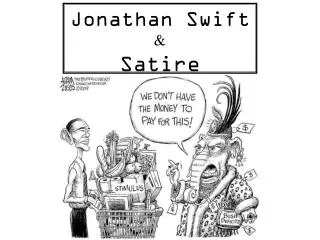
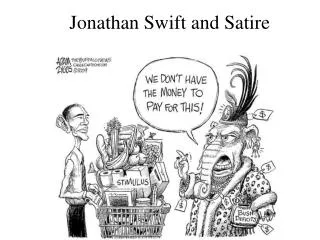
What Is Satire? • Humorous, witty • Clever, sarcastic • Criticizes event, person, group • Can you think of any modern-day examples of satire? • Television shows, movies, magazines, or books
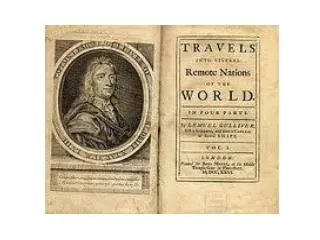
Resources • Jonathan Swift - Wikipedia, the free encyclopedia • Gulliver's Travels - Wikipedia, the free encyclopedia • SparkNotes: Gulliver's Travels • Images • Gulliver Image • Gulliver's Travels Book Cover