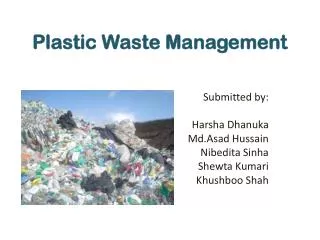
Plastic Waste Management
Plastic waste has become one of the most pressing environmental challenges of the 21st century. With over 400 million tons of plastic produced annually worldwide, itu2019s alarming to note that a significant portion ends up polluting our oceans, landfills, and ecosystems. Effective plastic waste management is crucial to mitigate its environmental impact and pave the way for sustainable living.


Plastic Waste Management
E N D
Presentation Transcript
Plastic Waste Management: An Urgent Call to Action Plastic waste has become one of the most pressing environmental challenges of the 21st century. With over 400 million tons of plastic produced annually worldwide, it’s alarming to note that a significant portion ends up polluting our oceans, landfills, and ecosystems. Effective plastic waste management is crucial to mitigate its environmental impact and pave the way for sustainable living. The Plastic Problem: A Growing Concern Plastic, due to its durability and cost-effectiveness, has revolutionized industries. However, its very properties make it an environmental hazard. Non-biodegradable plastic takes hundreds of years to break down, and improper disposal leads to pollution, harming wildlife, and affecting human health. Key statistics highlight the gravity of the issue: ● Over 8 million tons of plastic waste enter the oceans every year. ● Plastic constitutes 80% of marine debris, severely impacting aquatic life. ● By 2050, there may be more plastic than fish in the oceans by weight if current trends continue. Strategies for Effective Plastic Waste Management 1. Reduce Plastic Usage Prevention is the best cure. Reducing the production and consumption of single-use plastics is critical. Governments and industries must promote alternatives like biodegradable materials and reusable items. 2. Improved Waste Collection and Recycling Globally, only about 9% of plastic waste is recycled. Investments in better collection systems, advanced recycling technologies, and public awareness campaigns can increase recycling rates. 3. Adoption of Circular Economy Principles Transitioning to a circular economy involves designing products for reuse, repair, and recycling. This minimizes waste and encourages sustainable production and consumption. 4. Waste-to-Energy Conversion Technologies like pyrolysis and gasification can convert non-recyclable plastic waste into energy. However, such methods should be carefully monitored to avoid secondary pollution. 5. Legislation and Policy Enforcement Governments worldwide must implement strict regulations to control plastic production, encourage recycling, and ban harmful single-use plastics. Initiatives like plastic bag bans and Extended Producer Responsibility (EPR) programs are steps in the right direction.
6. Community and Corporate Involvement Public participation is essential. Communities can drive change through waste segregation at the source, clean-up drives, and adopting eco-friendly practices. Corporations, too, must adopt sustainable packaging solutions and take responsibility for their waste. Innovative Solutions in Plastic Waste Management ● Biodegradable Plastics: Research is advancing in developing plastics made from natural materials like corn starch and algae, which decompose more quickly. ● Plastic-to-Fuel Technologies: Converting plastic waste into usable fuels offers dual benefits of waste reduction and energy generation. ● Ocean Clean-Up Projects: Initiatives like The Ocean Cleanup use advanced technologies to extract plastic waste from oceans and rivers. The Role of Education and Awareness Educating individuals about the environmental impacts of plastic waste and the importance of waste segregation can create a cultural shift. Campaigns in schools, workplaces, and public spaces can empower citizens to become active participants in solving the crisis. Conclusion Plastic waste management is a collective responsibility requiring global cooperation between governments, industries, and individuals. By adopting sustainable practices, advancing recycling technologies, and creating robust policies, we can combat plastic pollution effectively. The time to act is now—before the problem becomes irreversible. Let us envision a future where plastic waste no longer clogs our ecosystems but is instead transformed into a resource for innovation and growth.
![Global Forecast Plastic Waste Management [Service & Equipment] - 2020](https://cdn4.slideserve.com/7241691/slide1-dt.jpg)