Download
1 / 14
140 likes | 241 Vues
Explore the characteristics, theories, and market prices of nonrenewable fossil fuels like oil, coal, and natural gas. Learn about the reserve capacity and delve into renewable energy sources like solar, wind, hydroelectric, geothermal, and biomass energy. Discover the importance of mineral resources, ores, and recycling for sustainable resource management.

E N D
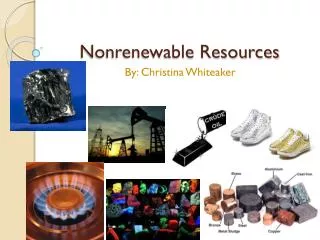
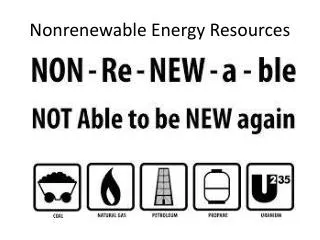
Nonrenewable Energy Resources • Fossil Fuels – fuels such as oil, cola, and natural gas, made from buried plants and organisms. • 2 theories • Formed during Flood • Formed over millions of years. • Coal– is rock that contains at least 50% plant remains. • Oil – a thick, black liquid formed from buried remains of microscopic marine organisms. • Current market price: $87.26 a barrell • Natural Gas – a gas formed from buried remains of microscopic marine organisms. • Reserve –The amount of fossil fuels that can be extracted at a profit. • Nuclear Energy – alternate energy sources produced from atomic reactions. Chapter 5 Lesson 2
Renewable Energy Resources Solar energy – energy from the sun. Wind Farm – A large number of windmills placed in one area for the purpose of generating electricity. Hydroelectric energy – Energy produced by water power. Geothermal energy – Energy produced by using hot magma or hot, dry rocks inside Earth. Biomass Energy – Energy produced from burning organic material such as wood, alcohol, and garbage. Chapter 5 Lesson 3
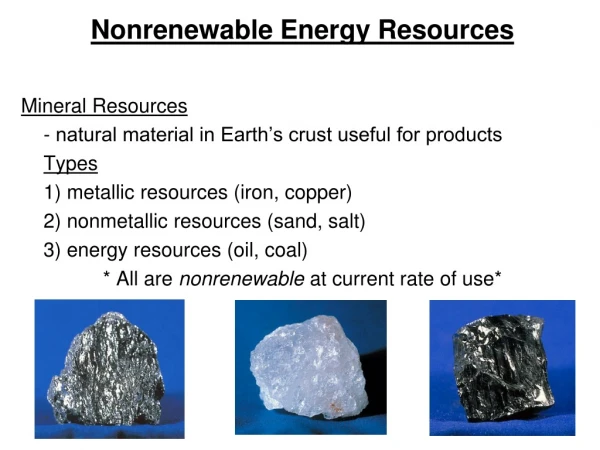
Mineral Resources Mineral Resources – a deposit of useful materials. Ore – Deposits in which a mineral or minerals exist in large enough amounts to be mined at a profit. Recycling – using old materials to make new ones.
Platinum ore Hematite ore Iron ore Hematite, Fe2O3, is the state mineral of Alabama. Hematite is the principal ore of iron and important in soils and sedimentary rocks