The Origins and Development of Ancient Rome: From Legends to Republic
Ancient Rome, according to legend, was founded in 753 B.C. by Romulus and Remus, benefiting from a strategic location and fertile soil, which enabled its growth. The Italian Peninsula, shielded by the Alps and bordered by the Mediterranean Sea, facilitated trade and protection. The region was inhabited by Latins, Greeks, and Etruscans. With the establishment of the Roman Republic, power resided with citizens who voted. Social structure was divided into patricians, plebeians, and slaves. Key developments like the Twelve Tables codified laws, promoting legal protection for all citizens.


The Origins and Development of Ancient Rome: From Legends to Republic
E N D
Presentation Transcript
The Beginnings of Rome • (according to legend) founded in 753 B.C by Romulus and Remus • Developed b/c of its strategic location and fertile soil
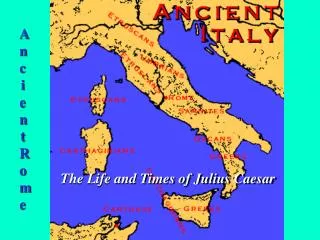
Centrally located in the Mediterranean Basin and distant from eastern Mediterranean powers • Italian Peninsula • Alps: Protection • Mediterranean Sea: Protection, seaborne commerce
Latins, Greeks, and Etruscans • 3 groups inhabited the region and eventually battled for control • Latins- first Romans • Greeks- coasts of southern italy and sicilybroughtromans closer to greek civilization • Etruscans- Northern Italy, metalworkers and engineers
The Early Republic Republic -A republic is a form of government in which power rests with citizens who have the right to vote to select their leaders. • citizenship with voting rights was granted to only free-born male citizens. Clip
Patricians and Plebeians Social structure in the RomanRepublic • Patricians: Powerful nobility (few in number) • Plebeians: Majority of population • Slaves: Not based on race
Twelve Tables • Written law code • In 451 B.C., a group of 10 officials began writing down Rome’s laws. • The laws were carved on twelve tablets, or tables, and hung in the Forum • established the idea that all free citizens, patricians and plebeians, had protection of the law.
Government under the Republic • Consuls- two officials • Like kings, they commanded the army and directed the government • power was limited • consul’s term was only one year long • the same person could not be elected consul again for ten years One consul could always overrule, or veto, the other’s decisions.
Senate • aristocratic branch of Rome's government. • both legislative and administrative functions in the republic • there were 300 members, chosen from the upper class of Roman society • Because membership was for life, the senate provided continuity. It also exercised enormous influence over both foreign and domestic policy
Assemblies • more democratic side of government • All citizen-soldiers were members of the centuriate assembly. In the early days of the republic, this patrician-controlled assembly appointed the consuls and made laws. It had less power than the senate • An assembly organized by the plebeians, the tribunal assembly, elected the tribunes and made laws for the common people. Later, it won the right to make laws for the republic.