Compressed Gases
Compressed Gases. Session Objectives. You will be able to: Identify compressed gases by the labels Safely transport, handle, and store compressed gas cylinders Safely use cylinders, regulators, and gauges Know the specific hazards of some common compressed gases.

Compressed Gases
E N D
Presentation Transcript
Session Objectives • You will be able to: • Identify compressed gases by the labels • Safely transport, handle, and store compressed gas cylinders • Safely use cylinders, regulators, and gauges • Know the specific hazards of some common compressed gases
Compressed Gases Can Be Deadly • Employee killed when cylinder turned into a rocket because its valve was knocked off • Employee suffocated after entering a space filled with nitrogen • Facility damaged when acetylene cylinder heated up and exploded • Employee’s eyebrows singed when lighting a gas barbecue grill
What Are Compressed Gases? • Chemicals include: oxygen, argon, nitrogen, helium, acetylene, hydrogen, nitrous oxide, carbon dioxide, ammonia, chlorine • Compressed gases used in bulk systems or portable cylinders • Industry uses include welding, cutting, operating tools, transferring liquids, blowing agents, and laboratories
General Hazards • Gases are under pressure • Specific hazardous characteristic of each compressed gas • Check MSDS for specific hazards
Compressed Gas Labels • Name of the compressed gas • Hazards of the compressed gas • NFPA labels • DOT labels • Never remove labels
Bulk Systems • Built and maintained by qualified personnel • Filled by trained and qualified personnel • Tank and piping properly labeled • Tank system protected from damage
Labels, Bulk Systems–— Any Questions? • Any questions about the general hazards of compressed gases, labels, or bulk systems?
Transporting Cylinders • Receiving/shipping cylinders requires DOT hazardous materials training • Use lift trucks or hoists with proper lifting equipment only • Never use a sling or electromagnet to hoist a cylinder • Never lift a cylinder by the valve cap
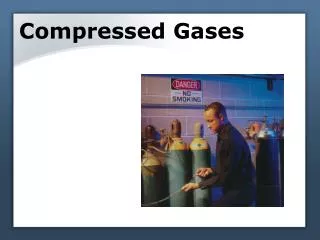
Handling Cylinders Manually • Close the valve and put on the cap • Do not walk cylinder by holding onto valve stem or cap • Never roll a cylinder on its side • Use a hand truck with a secure system
Storing Cylinders • Dry, well ventilated, protected from weather • Away from combustibles, heat sources, electrical systems • Not in elevators, staircases, hallways, etc. • Oxygen separated from fuels
Storing Cylinders (cont.) • Store cylinders upright • Secure cylinders so they don’t fall over • Store cylinders with valve cap on • No sparks, smoking, open flames • Sign requirements
Keep upright and secure Keep away from flames, sparks, electricity Keep oil, grease, flammables off cylinders Open valve by hand; if tools are required, don’t use the cylinder Open valve slowly with hand to the side Don’t tamper with safety devices Using Cylinders
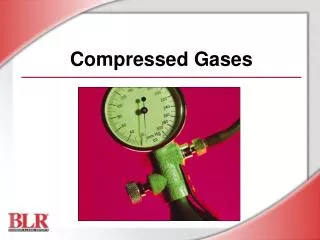
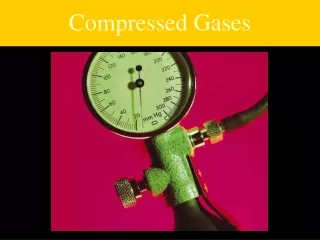
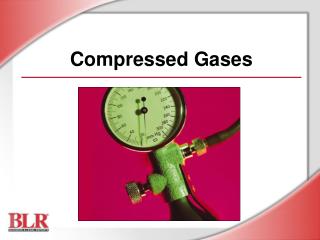
Regulators and Gauges • Regulator and gauge rated for the pressure • Regulator must be compatible with gas • Do not exchange gauge from one gas to another • Use thread sealant approved for application • Wear eye protection Image Credit: National Center for Patient Safety
Leaking Cylinders • Never try to repair • Tag it, move it outdoors, and keep it away from heat or flame • Call manufacturer or dealer
General Cylinder Safety • Only accept and use DOT-approved cylinders • Do not drop cylinders • Protect cylinders from cuts and abrasions • Don’t use cylinders for unintended function such as a roller or support • Don’t tamper with safety valves • Keep caps on whenever not in use
Compressed Gas Cylinders—Any Questions • Any questions about how to safely handle, store, and use compressed gas cylinders?
LPG (Propane) • Liquefied petroleum gas (LPG) includes propane, propylene, butane, butylene • Liquid under pressure, released as a gas • LPG containers must meet specific design criteria • Cylinders have pressure relief valves • Regulated by local fire department
LPG Hazards • Flammable and reactive • Propane is colorless and odorless • Heavier than air, may build up and explode when ignited • Adequate ventilation required
LPG Containers • Marked as an approved container • Capacity and design pressure • Shut-off valve, pressure-relief valve, level gauge • Never use container not approved for LPG, corroded or damaged, or missing accessory
LPG Handling • Do not smoke near propane • Fill or dispense outside • Wear gloves and goggles • Secure cylinder to forklift or hand truck • Report damaged cylinders • Check for leaks
Compressed Air • Flying fragments penetrate eyes and skin • Compressed air can penetrate skin, damage eyes and ears • Use lowest pressure for the task • Wear eye and skin protection • Store air hose properly and inspect regularly
Oxygen • Does not burn or explode by itself • Supports combustion process • Explosive with acetylene, hydrogen • Never handle with oily hands or gloves
Acetylene • Flammable • Cylinder packed with porous material and solvent that holds the acetylene • Once the valve is opened, the acetylene flows out in gaseous form • Pressure relief valve using fusible metal that melts at about 212°F
Other Gases • Gases such as argon and nitrogen are used to displace air • Helium could cause rapid suffocation • Gases such as ammonia and chlorine will cause large evacuations even for small leaks
Common Compressed Gases—Any Questions? • Any questions about the hazards of any of these common compressed gases?
Key Points to Remember • Cylinders must always be stored and secured properly • Handle and move cylinders safely • Cylinders and bulk systems must be properly labeled • Know the hazards of a compressed gas before using it