Understanding Ethyl Acetate and Crystallography in Chemical Structures
Ethyl acetate (CH3CO2CH2CH3) serves as a common solvent and nail polish remover. This overview features an analysis of its electrostatic potential map to illustrate its polarity. Additionally, the crystallographic properties of zinc sulfide (sphalerite) and perovskite are examined, detailing the packing of ions within their cubic unit cells and determining the oxidation state of titanium in perovskite. The phase diagrams for carbon and other substances are explored to determine boiling/melting points and state under various conditions, alongside diagrams to identify solid, liquid, and vapor phases.

Understanding Ethyl Acetate and Crystallography in Chemical Structures
E N D
Presentation Transcript
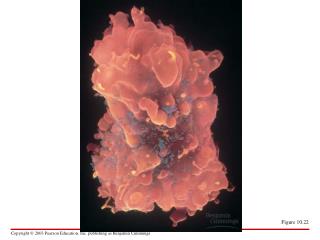
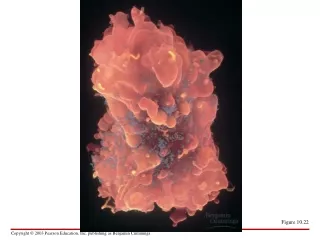
10.22 Ethyl acetate, CH3CO2CH2CH3is commonly used as a solvent and nail-polish remover. Look at the following electrostatic potential map of ethyl acetate, and explain the observed polarity.
10.23 Identify each of the following kinds of packing.
10.24 Zinc sulfide, or sphalerite, crystallizes in the following cubic unit cell: (a) What kind of packing do the sulfide ions adopt? (b) How many S2 ions and how many Zn2+ ions are in the unit cell?
10.25 Perovskite, a mineral containing calcium, oxygen, and titanium, crystallizes in the following cubic unit cell: (a) What is the formula of perovskite? (b) What is the oxidation number of titanium in perovskite?
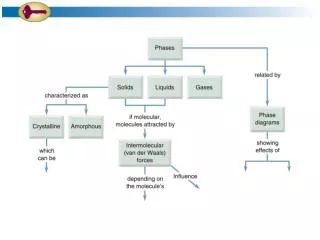
10.26 The phase diagram of a substance is shown below. (a) Approximately what is the normal boiling point, and what is the normal melting point of the substance? (b) What is the physical state of the substance under the following conditions? (i) T= 150 K,P = 0.5 atm (ii) T= 325 K,P = 0.9 atm (ii) T= 450 K,P = 265 atm
10.27 Boron nitride, BN, is a covalent network solid with a structure similar to that of graphite. Sketch a small portion of the boron nitride structure.
10.28 Imagine a tiled floor made of square and octagonal tiles in the following pattern. Identify the smallest repeating unit, analogous to a unit cell.
10.29 The following phase diagram of elemental carbon has three different solid phases in the region shown. (a) Show where the solid, liquid, and vapor regions are on the diagram. (b) How many triple points does carbon have? Circle each on the diagram. (c) Graphite is the most stable solid phase under normal conditions. Identify the graphite phase on the diagram. (d) On heating graphite to 2500 K at a pressure of 100,000 atm, it can be converted into diamond. Identify the diamond phase on the graph. (e) Which phase is more dense, graphite or diamond? Explain.