Understanding Viruses: Structure, Infection Cycles, and Applications in Medicine
This comprehensive overview explores the structure and function of viruses, highlighting their components, such as the capsid, genetic material (DNA or RNA), and enzymes. It details the viral infection cycles, including the lytic and lysogenic cycles, and illustrates how viruses hijack host cell machinery to replicate. Furthermore, the various applications of viruses in pest control, vaccines, anti-cancer treatments, and gene therapy are discussed. Additionally, the section touches on related entities like viroids and prions, emphasizing their role in diseases.

Understanding Viruses: Structure, Infection Cycles, and Applications in Medicine
E N D
Presentation Transcript
VIRUSES: GENES IN PACKAGES Viruses Components Infection cycle 3. DNA, RNA viruses 4. Uses of viruses
Components of a virus (phage) 1. Protein coat = capsid 2.genetic material DNA or RNA 3. enzyme
Components of a virus Membranousenvelope • envelope • capsid • genetic material • Ex. flu viruses RNA Proteincoat Glycoprotein spike Figure 10.18A
Phage reproductive cycle Phage DNA directs host cell to make more phage DNA and protein parts. New phages assemble. Phage attaches to bacterial cell. Phage injects DNA. Cell lyses and releases new phages.
Viral DNA may become part of the host chromosome Phage Attachesto cell Bacterialchromosome Phage DNA Cell lyses,releasing phages Phage injects DNA Many celldivisions Occasionally a prophagemay leave the bacterialchromosome LYTIC CYCLE LYSOGENIC CYCLE Phagesassemble Phage DNAcircularizes Lysogenic bacteriumreproduces normally,replicating the prophageat each cell division Prophage OR New phage DNA andproteins are synthesized Phage DNA inserts into the bacterialchromosome by recombination
Glycoprotein spike VIRUS Protein coat Viral RNA(genome) Envelope Plasmamembraneof hostcell Entry 1 Uncoating 2 • Viruses redirect the host cell machinery to make more viruses • Some animal viruses steal a bit of the host cell’s membrane Viral RNA(genome) RNA synthesisby viral enzyme 3 Proteinsynthesis RNA synthesis(other strand) 5 4 mRNA Template New viral genome Newviral protein Newviral proteins Assembly 6 Exit 7 Figure 10.18B
Plant viruses are serious agricultural pests • Most plant viruses have RNA • Example: tobacco mosaic disease Protein RNA Figure 10.19
The deadly Ebola virus causes hemorrhagic fever • Each virus is an enveloped thread of protein-coated RNA • Hantavirus is another enveloped RNA virus • SARS - coronavirus • Avian flu Figure 10.20A, B
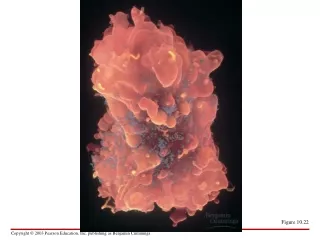
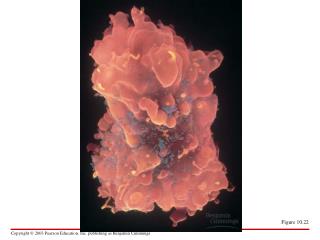
HIV, seen here attacking a white blood cell Figure 10.22
HIV infection Figure 10.22x1
AIDS quilt Figure 10.22x2
Uses of Viruses • Pest control • Vaccines • Anti-cancer treatment • Gene therapy
Anti-cancer viruses Makes use of viral ability to enter only cells of one type Allows targeting of therapy to tumor cells Enables identification of small tumor sites
Other parasitic particles • Viroids - infectious RNA (no capsid) • Prions - infectious protein • Cellular PrP, prion PrP • Spongiform encephalopathies cause neural degeneration