

SlideServe
Menu
Préférences
© SlideServe · v2026

Arabian Oryx

egan avatar
8 diapositives · 2.5K Views · Sep 21, 2014

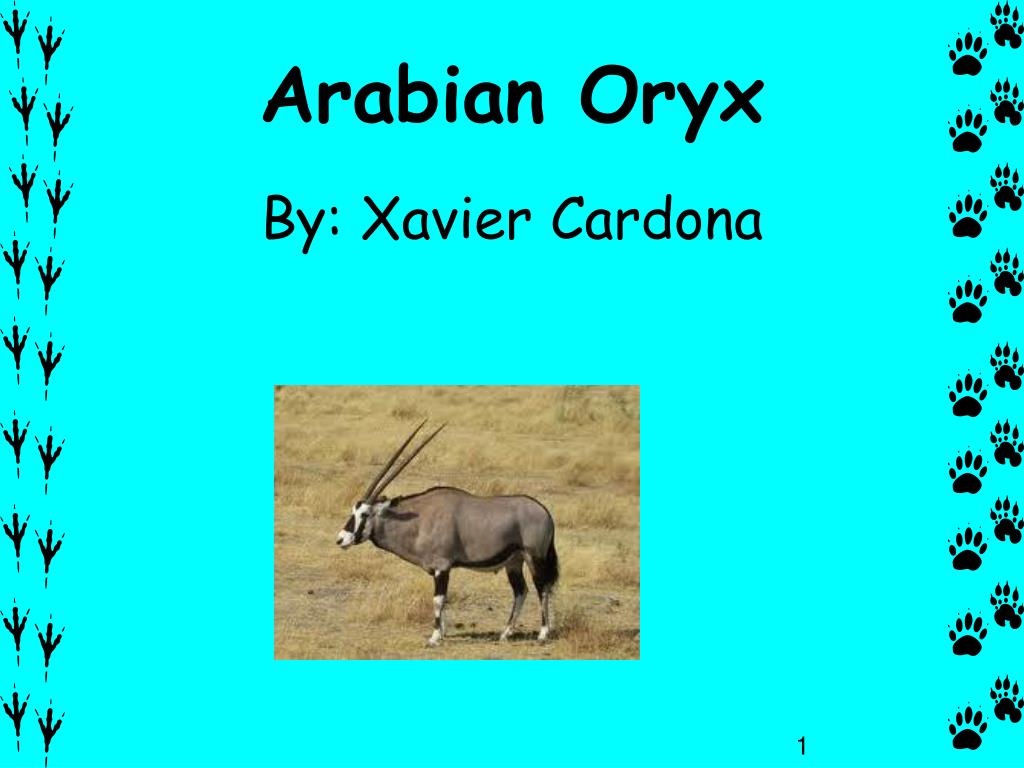
Arabian Oryx. By: Xavier Cardona. 1. Contents. Title page page 1 Description page 2 Habitat page 3 Diet page 4 Survival page 5 Other page 6 Bibliography page 7. Description.
Arabian Oryx - slide 1
01 / 8Arabian Oryx
1 / 17

Télécharger la présentation

Arabian Oryx
Une image / un lien ci-dessous est fourni (tel quel) pour télécharger la présentation

Politique de téléchargement : le contenu du site vous est fourni TEL QUEL pour votre information et votre usage personnel ; il ne peut être vendu, concédé sous licence ni partagé sur d’autres sites sans l’accord de son auteur.Le contenu vous est fourni TEL QUEL, pour votre information et votre usage personnel uniquement. Téléchargez la présentation en cliquant sur ce lien. Lors du téléchargement, si vous ne parvenez pas à télécharger une présentation, l’éditeur a peut-être supprimé le fichier de son serveur.Pendant le téléchargement, si vous ne parvenez pas à obtenir une présentation, le fichier a peut-être été supprimé par l’éditeur.

F I N

Plus de contenu associé

Transcription de la présentation
  1. Arabian Oryx By: Xavier Cardona 1

  2. Contents • Title page page 1 • Description page 2 • Habitat page 3 • Diet page 4 • Survival page 5 • Other page 6 • Bibliography page 7

  3. Description • An Arabian Oryx is a mammal with long ringed horns. An oryx is a creamy white coat with a light brown patch. An Arabian oryx has large ears and eyes. An adult oryx are white with brown legs. Oryxes have long legs and wide hoofed feet. Oryxes are 5 feet long and 2 ½ to 3 ½ feet tall at the shoulder. There are more than 1,450 Arabian oryxes world wide. 2

  4. Habitat The Arabian Oryx lives in the Arabian desert in Asia and in Africa and in Sparse grassland. the Arabian Oryx lives in Oman, Bahrain, Israel and Saudi Arabia. 3

  5. Diet • Oryxes eat by grazing or feeding on grass and other plants. Oryxes can go for weeks without drinking water. It eats grasses, shrubs and roots. They ruminate a partly-digested “cud” which they chew and then swallow for the last time. An Arabian oryx is an herbivore. 4

  6. Survival • Oryxes have long sharp horns to kill lions and jackals. Oryxes have large ears and eyes to see predator. Oryxes are an endanger species mostly because of over hunting and disease. The Arabian oryxes became extinct in the wild. 5

  7. Other Facts • Oryxes feed their babies milk to get strong bones. The last Arabian Oryx was killed in 1972. the Endangered Arabian Oryx coryx leucoryx is believed to have started the legend of the unicorn because when the animal is seen sideways it appears to have a single horn! 6

  8. Bibliography • Anita Ganeri , Arabian Oryx, 2011 • Enchanted learning.com 2014 7