Download
1 / 15
150 likes | 268 Vues
The Northern Renaissance marks a transformative period from 1450 to 1600 in Northern Europe, characterized by the flourishing of art, literature, and humanism. Influenced by Italian Renaissance ideals, artists like Albrecht Dürer and Pieter Bruegel revolutionized painting with innovative techniques and themes of everyday life. Humanists like Thomas More and writers such as Shakespeare emerged, advocating for societal reform and expressing human experience. The invention of the printing press by Johann Gutenberg facilitated the spread of Renaissance ideas, reshaping culture and society.

E N D
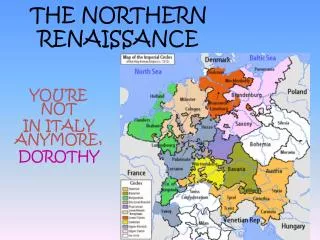
The Northern Renaissance The Renaissance Spreads North from Italy (1450 – 1600)
Donatello (Donato di Niccolò di Betto Bardi) (1386 – December 13, 1466) 1425 – 1430
Leonardo da Vinci (1452 – 1519) 1495 – 1498 15 ft. X 29 ft. 1504 - 1506
RaphaelSanzio (1483 – 1520) The School of Athens (1509-1510) Madonna and Child With Book (1504)
MichelangeloBuonarroti (1475 – 1564) David (1501 – 1504) Sistine Chapel (1508 – 1512)
SofonisbaAnguissola(1532 – 1625) King Philip II of Spain (1558)
The Northern Renaissance Begins • 1450 – Population begins to grow in N. Eur. And trade increases again. Like in Italy, many merchants began to sponsor artists. • England and France had strong monarchs. Francis I invited da Vinci to retire in France and hired Italian artists to redecorate his palace at Fontainebleau and it became a showcase for Renaissance art. • Northern humanists were inspired to develop plans for social reform based on Judeo-Christian values.
German Painters • Albrecht Durer – studied in Italy (1494) & produced woodcuts and engravings • Hans Holbein the Younger – portrait painting; painted King Henry VIII of England
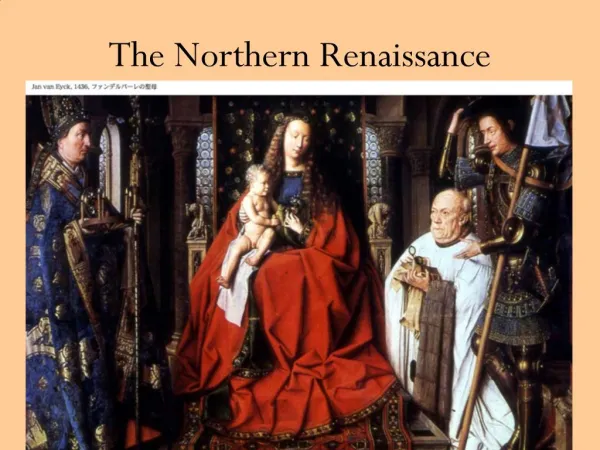
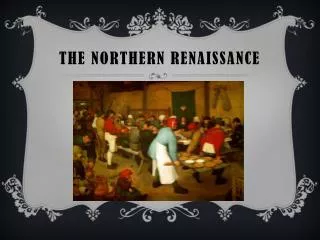
Flemish Painters • Flanders (N. Eur. – Sp. Netherlands) • Jan van Eyck – specialized in realistic oil painting • Pieter Bruegel– everyday peasant life; weddings, dances, harvests; often large numbers of people Peasant Wedding (1568)
Northern Writers urge Reform • Christian Humanism – the failure of the church to teach people to live as Christians • Thomas More – Utopia (1516) – “no place” a land where greed and corruption didn’t exist
The Elizabethan Age (1558-1603) • Mid-1500s – Renaissance spread to England • Queen Elizabeth I of England – very educated – spoke 5 languages, music, and poetry • Did much to develop English art and literature
William Shakespeare (1565 -1616) • Greatest playwright of all time? • By 1592 lived in London; Globe Theater • Hamlet, Romeo and Juliet, Othello, and Macbeth • Wrote in the vernacular. • He influences culture today b/c he is entertaining, had interesting themes, and has inspired many movies.
Printing Press Spreads Renaissance Ideas • Johann Gutenberg (1440) – Mainz, Germany • 13th Century – block print items reached Eur. from China • 1 book =5 mo. by hand copyist • 500 books = 5 mo. by press and one man • Gutenberg Bible (1455)