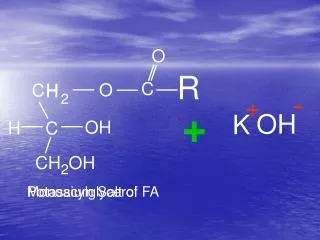
Saponification of Monoacylglycerol: Analyzing the Reaction with Potassium Hydroxide
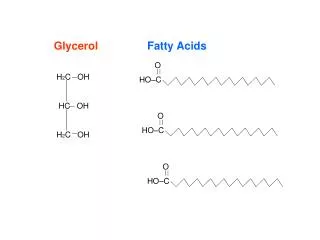
This study explores the saponification process of monoacylglycerol using potassium hydroxide. The reaction involves the formation of soap from fats by hydrolysis, producing glycerol and fatty acid salts. The resultant products include glycerol and a pungent compound, acrolein, which can be identified by its rancid odor. The experiment includes specific steps using potassium sulfate and glycerol to facilitate the reaction, emphasizing the chemistry behind triglycerides and the formation of fatty acid soaps.

Saponification of Monoacylglycerol: Analyzing the Reaction with Potassium Hydroxide
E N D
Presentation Transcript
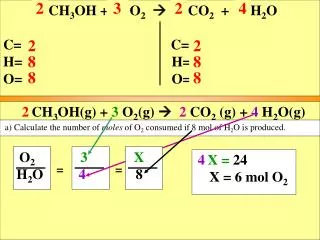
O R C O C H H - 2 + + OH K OH H C CH2OH Monoacylglycerol Potassium Salt of FA
O OCR O OCR O OCR - + - K OH CH2 - + + - K OH CH - + - K OH CH2 POTASSIUM HYDROXIDE TRIGLYCERIDE GLYCEROL FATTY ACID SOAPS
PUNGENT/ RANCID ODOR 0.5 g KHSO4 10 drops of Glycerol
H O H C C H Glycerol OH H H C C OH H H
H O C C Acrolein H H C C H H