Computer Network Topology
70 likes | 415 Vues
This article explores various computer network topologies, including Chain, Ring, Mesh, Torus, Tree, Star, Cube, and Hypercube. It emphasizes the significance of network diameter, defined as the maximum shortest path between any two nodes in the network. Furthermore, the concepts of embedding and dilation are discussed, with embedding referring to the mapping of nodes from one network to another, and dilation representing the maximum number of links in the embedding network corresponding to one link in the embedded network. Discover how these topologies impact network efficiency and design.


Computer Network Topology
E N D
Presentation Transcript
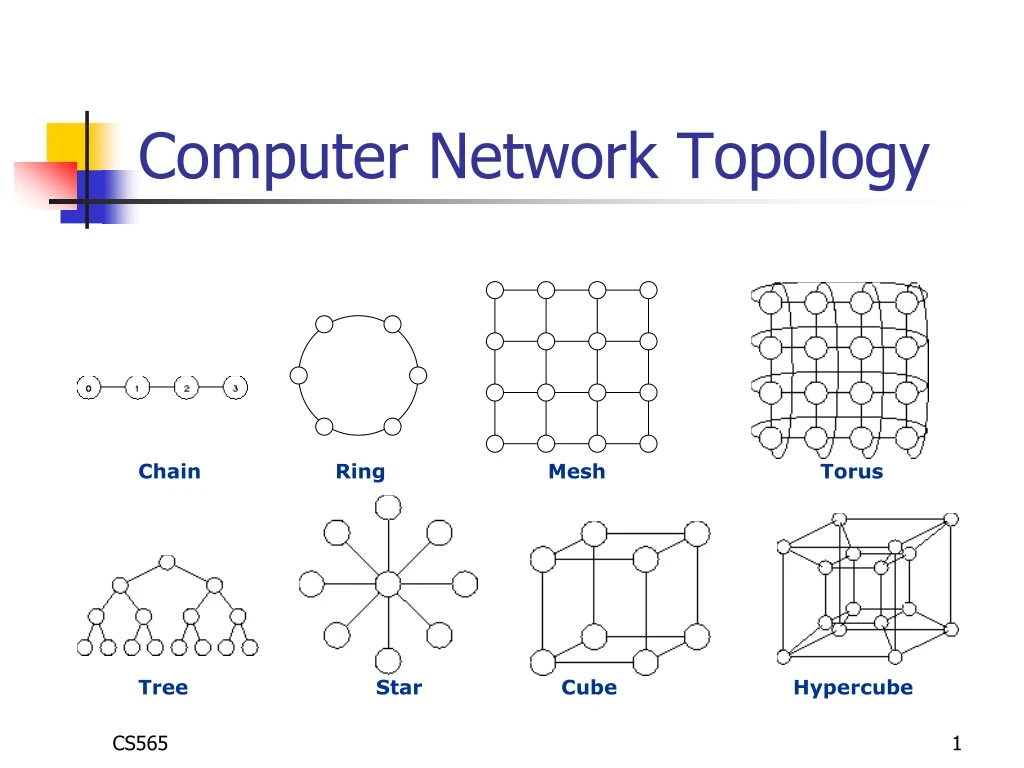
Computer Network Topology Chain Ring Mesh Torus Tree Star Cube Hypercube
Diameter • Diameter • Diameter, D, of a network having N nodes is defined as the maximum shortest paths between any two nodes in the network
Computer Network Topology Diameter? Chain Ring Mesh Torus Tree Star Cube Hypercube
Embedding & Dilation • Embedding • mapping nodes of one network onto another network. • Dilation • the maximum number of links in the “embedding” networking corresponding to one link in the “embedded” network.