The Renaissance: A Rebirth of Art, Culture, and Innovation
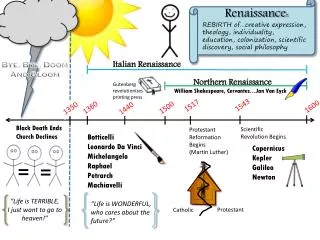
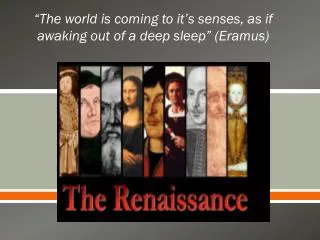
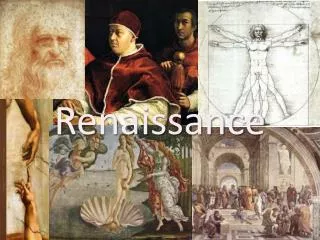
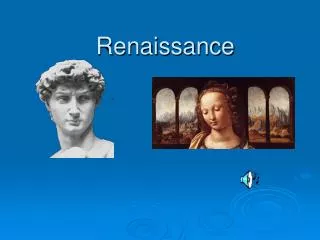
The Renaissance, meaning "re-birth," marked a profound rediscovery of Greek and Roman culture, emphasizing the exploration of life's facets through art. Key breakthroughs included oil on stretched canvas, perspective with vanishing points, chiaroscuro techniques, and pyramid configuration. Notable figures such as Leonardo da Vinci, Michelangelo, and Raphael exemplified the era's intellectual vigor and creativity, producing masterpieces like the "Pieta" and "David." Jan Van Eyck and Albrecht Dürer revolutionized art with their meticulous techniques and innovative printmaking.

The Renaissance: A Rebirth of Art, Culture, and Innovation
E N D
Presentation Transcript
Renaissance • Means “re-birth” • Rediscovery what art was, looking back to Greek and Roman culture. • Art was a means to explore all facets of life on earth • 4 breakthroughs- Oil on stretched canvas, Perspective (vanishing point), use of light and shadow ( chiaroscuro), and pyramid configuration
Leonardo Da Vinci • “Renaissance Man” • Stressed intellectual and creativity of art- also well known for his sketches of anatomy and “inventions”
Michelangelo • “The divine” – known as a prodigy – carving the renown Pieta at only 23.
Raphael Raphael was adored– more for his looks. Very handsome- young when Leonardo and Michelangelo were older. A lady’s man. “Sposalizio”
Jan Van Eyck Known for immaculate, precise, SMALL detail. A part of the Northern Renaissance. Learned from his brothers- all of them were illuminists ( made drawings for manuscripts) “Arnolfini Portrait”
Dürer Durer brought woodcuts into the art world. Before him, were just used for b&w studies, but now Durer used them as his main medium for ART- the first to use printmaking as a medium for art. “Apocalypse”