GE Integrated System Telecom Base Station
This project explores the need for reliable energy solutions for Base Transceiver Stations (BTS) in Kenya, focusing on alternative energy sources like solar and wind power. With a 1.2 kW load requirement and operating at -48 VDC, our design incorporates sodium metal halide batteries and protective hut equipment for electronics. Given Kenya’s climate and current energy landscape, which relies heavily on hydropower and limited fossil fuels, the utilization of hybrid systems can enhance telecom signal availability and support the country’s goal of technological advancement without altering daily life significantly.

GE Integrated System Telecom Base Station
E N D
Presentation Transcript
GE Integrated SystemTelecom Base Station Christian Poluch, Dillon Gearing, Annie Graszl Group 7
Needs Expressed • No grid or unreliable grid – need for an alternate source of energy • Protection for the electronics • Positive social implications in the chosen country
Requirements in Product Design • Alternate energy source • 1.2 kW load, BTS DC Equipment operates at -48 VDC • Incorporation of sodium metal halide batteries for energy storage • Hut equipment to protect electronics
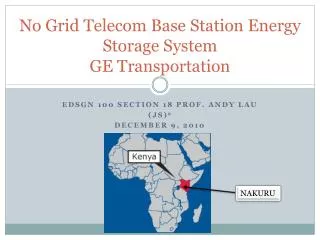
Kenya • Semi-presidential republic • Official language- Swahili, English • Total GDP(PPP)- $65.059 billion • Climate- tropical • Hot and humid near the coast • Dry inland to the North and Northeast
Kenyan Income and Energy • Market-based economy • Tourism accounts for 63% of income. • Agriculture accounts for 24% of income. • Industry such as food production accounts for 14% of income. • The majority of Kenya’s energy comes from hydroelectric dams along the Tana River. • The rest of their energy comes from petroleum plants, geothermal plants and some is imported from Uganda.
GE Integrated System • Why is cell phone service relevant? • Kenya has a goal to become a technological society. • In order to do this, availability of cell phone signal is key. • Why use an alternative energy source? • The majority of Kenya’s electricity comes from alternative energy sources. • Nonrenewable resources (oil and natural gas) are rare in Kenya – would need to be imported. • What would be the effects on Kenyan society? • Bring technological advances into a country that is continuing to grow. • Would not greatly alter the current lifestyle of Kenyan citizens.
Geothermal Power • Uses thermal energy that occurs from hot springs, decaying radioactive material, volcanic activity, and absorbed solar energy. • High cost to implement • Low cost to maintain • Only 10-23% efficient
Hydroelectric Power • Creates power by using flowing water. • Expensive to implement • Low maintenance costs • Creates high amounts of power
Wind Power • Only takes up a small plot of land for base of turbine • Moderately Inexpensive • Available in a range of sizes • However, wind is not always available
Solar Power • Low startup cost • Low maintenance cost • Panels can last a long time • However, sunlight is not always available
Wind and Solar Combination • Mini wind turbines combined with solar arrays • Add a large amount of reliability to the system • In such weather conditions where sunlight is not available, wind often is • Wind greatly improves the effectiveness of off-the-grid systems, especially in winter • Cost efficient
Solar Component • Implement GE Solar Panels • Solar panel will be set at an 85˚ angle • Optimum angle to attract the most sunlight, especially during the winter months • For the sake of cost efficiency, the panel will remain at the 85˚ angle throughout the year • Will keep maintenance costs low
Wind Component • System will incorporate a smaller wind turbine model • Minimize costs • Minimize wasted energy
Works Cited • http://www.alternative-energy-guide.com/articles/electricity/hybrid%20systems.htm • https://www.cia.gov/library/publications/the-world-factbook/geos/ke.html • http://www.ecofriend.org/entry/green-mountain-energy-solar-and-wind-energy-at-their-combined-best/