Download
1 / 6
60 likes | 187 Vues
This article outlines ten key principles designed to improve clinical decision support (CDS) systems, making evidence-based medicine a practical reality in healthcare. It discusses the challenges of knowledge lag, gaps between optimal and actual practice, and the importance of integrating computer-based support into clinical workflows. Key recommendations include ensuring low response times, anticipating physician needs, providing real-time context, and maintaining a user-friendly interface. By incorporating these principles, healthcare systems can enhance their CDS capabilities, ultimately improving patient outcomes and clinical efficiency.

E N D
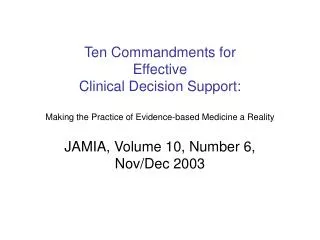
Ten Commandments for Effective Clinical Decision Support:Making the Practice of Evidence-based Medicine a Reality JAMIA, Volume 10, Number 6, Nov/Dec 2003
Introduksjon Kontekst & motivasjon for artikkel • ”Evidence-based Medicine” • ”Knowledge lag & Guidelines” • ”Gap – Optimal vs Actual Practice” • ”Computer-based Clinical Decision Support” Initielle ”decision support” forslag • Advarsler og medisineringsstøtte > diagnoseassistanse, men hvordan?
10 råd for eff.klin.besl.støtte • Fart = alt, noen krav/forventninger: • Lav responstid fra it-system (raskt) • Tid for kommunikasjon med it-system < tilsvarende papirsystem • Prediker legens ønsker og lever de • Sanntid • Kontekst • Data Mining adverse events
10 råd for eff.klin.besl.støtte • Pass inn i legens arbeidsflyt/vaner • Små endringer stor forskjell • F.eks. Ikke lag lett ignorerbare viktige advarsler • Forstå at legen ikke kan stoppes • Stoppe legen ”i fart” funker ikke • Endre retning er bedre enn stopping • ”Systemkonstruktivitet”
10 råd for eff.klin.besl.støtte • K.I.S.S • Høflig system, spør når det må • Mål effekt, få feedback fra og svar legen • Drift og Vedlikehold kunnskapssyst. • Basert på 9.
Avslutning • 10 nivåer for grad av ”itfisering” • US helsevesen stort sett på nivå 1 • Guidelines har fungert dårlig i primærhelse for kroniske sykdommer