Russia’s Turbulent Transformation: Analyzing the Inter-Revolution Era (1907-1914)
230 likes | 351 Vues
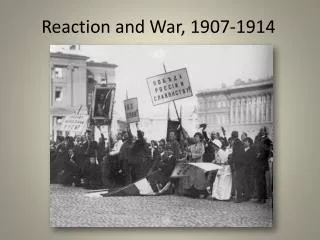
This exploration delves into Russia during the Inter-Revolution period between 1907 and 1914, marked by systemic crises both from below and above. It analyzes the failures of Stolypin's agrarian reforms, the resurgence of worker radicalism, and the discontent across various societal segments, including minorities, peasants, and workers. Additionally, it evaluates the Third-of-June regime's challenges, the defection of the intelligentsia, and the impact of foreign policy on domestic turmoil, culminating in a critical assessment of Russia's political landscape leading up to the 1917 revolutions.


Russia’s Turbulent Transformation: Analyzing the Inter-Revolution Era (1907-1914)
E N D
Presentation Transcript
4Russian Inter-Revolution1907-1914 • A. Themes • B. Third-of-June Regime, 1907-11 • C. Crisis from Below 1. Minorities 2. Peasants 3. Workers D. Crisis at the Top • Crisis from Without • Conclusion
A. Themes • Breakdown of dysfunctional political system • Minority issue • Failure of Stolypin agrarian reform • Re-emergence of worker radicalism • Crisis in elites, defection of intelligentsia • Counterproductive foreign policy
B. Third-of-June Regime, 1907-11 • Four power blocs • Successful partnership, 1907-9 • Growing tensions • Naval reform bill • Old Believer bill • Finnish bill • Western zemstvo bill • Why Stolypin failed
C. Crisis from Below1. Minorities • Major dynamics • Case studies
Crisis from Below2. Peasants • Stolypin reform: conception • Peasant response • Implementation • Agrarian crisis: intensification
Peasant Duma Deputy, G.F. Fedorov (1908 speech) When the peasants sent me here, they said: “Go, ask, demand that they divide up the land for us.” We did not come here to carve up our tiny plots into even smaller pieces. The government should not think that from this law the country will become content and tranquil. If I should get the two acres of land [that I now hold], all the same I shall scream: “Give me land!” I have nothing to eat. I can’t exist!! As to the comment by Duma deputy Shidlovskii [a noble landowner] that our [national] culture will go under, then just let him show me what “culture” will allow me to survive on two acres of land!
Crisis from Below3. Workers • Strike movement • Lena Goldfields • Labor press • Bolsheviks and Mensheviks
D. Crisis at the Top, 1911-14 • Intelligentsia: Vekhi Syndrome • Government: After Stolypin • Duma: United Opposition
E. Crisis from Without 1. Russia as secondary power 2. Foreign policy as domestic policy 3. New debacles