
SlideServe
Menu
Préférences
© SlideServe · v2026

By: Elaine Chumley

emma avatar
12 diapositives · 305 Views · Jul 21, 2014

By: Elaine Chumley. Mu Cephei. Formation. Formed from exploded supernovas . Gravity pulls the clouds of gas and dust together. A c ollapsing cloud forms a hot core that’s what starts to develop a star. Herschel's Garnet Star. AKA: “ Herschel’s Garnet Star "
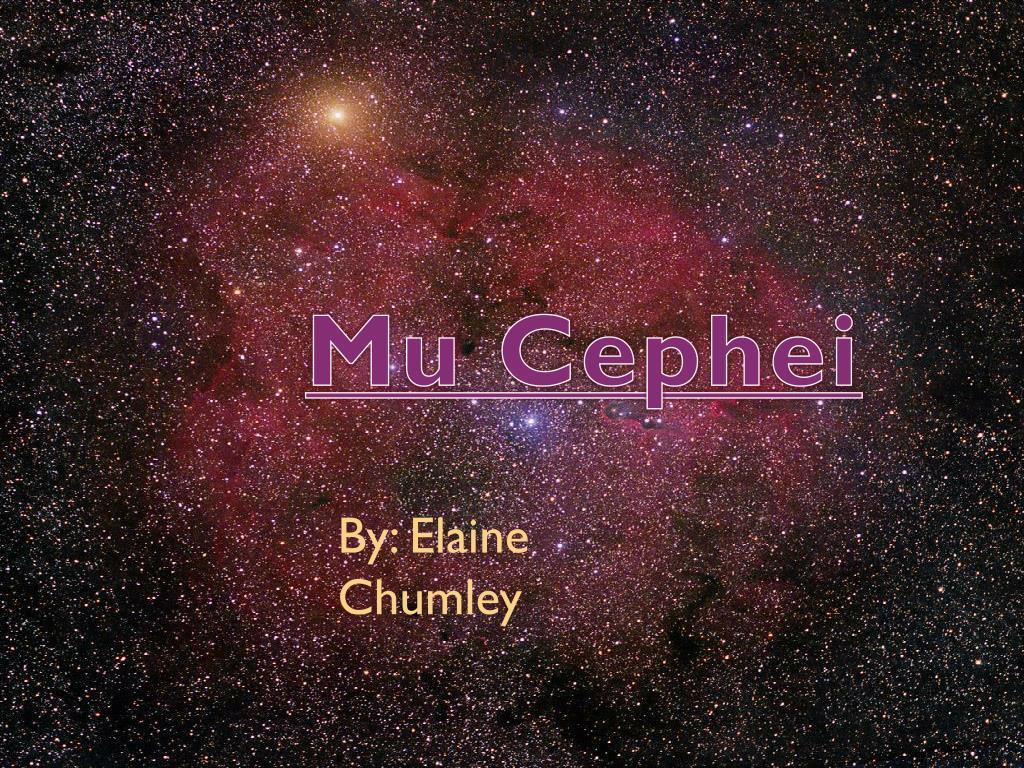
By: Elaine Chumley - slide 1
01 / 12By: Elaine Chumley
1 / 17

Télécharger la présentation

By: Elaine Chumley
Une image / un lien ci-dessous est fourni (tel quel) pour télécharger la présentation

Politique de téléchargement : le contenu du site vous est fourni TEL QUEL pour votre information et votre usage personnel ; il ne peut être vendu, concédé sous licence ni partagé sur d’autres sites sans l’accord de son auteur.Le contenu vous est fourni TEL QUEL, pour votre information et votre usage personnel uniquement. Téléchargez la présentation en cliquant sur ce lien. Lors du téléchargement, si vous ne parvenez pas à télécharger une présentation, l’éditeur a peut-être supprimé le fichier de son serveur.Pendant le téléchargement, si vous ne parvenez pas à obtenir une présentation, le fichier a peut-être été supprimé par l’éditeur.

F I N

Plus de contenu associé

Transcription de la présentation
  1. By: Elaine Chumley Mu Cephei

  2. Formation • Formed from exploded supernovas. • Gravity pulls the clouds of gas and dust together. • A collapsing cloud forms a hot core that’s what starts to develop a star

  3. Herschel's Garnet Star • AKA: “Herschel’s Garnet Star" • deep red color; Red Giant • Most intensely colored stars ever recorded when viewed through a telescope

  4. Herschel • Name honers: star's deep color and Sir William Herschel • Discovered planet Uranus 1781

  5. Mu Cephei • 38,000 times brighter than the sun • Light years away • Absolute visual magnitude: -6.7

  6. Constellation • Located in the constellation of Cepheus:

  7. Comparisons • Larger than the sun • If it replaced our sun, it would extend as far to Jupiter or Saturn.

  8. Location! Location! Location! • Largest to naked eye • Best viewed during August through January

  9. One of the largest and brightest stars in the known galaxy. • Too far for a good parallax distance calculation. • Approx 2400 light years away.

  10. Unstable and pulsates • Surrounded by warm water vapor • Shell of dust and gas

  11. Death of Mu Cephei • Nearing end of life • Core is fusing helium to carbon • In a few million years the star will explode as a supernova • Stellarblack hole

  12. Citations • http://www.windows2universe.org/the_universe/MuCephi.html • http://stars.astro.illinois.edu/sow/garnet.html • SierraStarGazers.org • http://www.aavso.org/vsots_mucep