Peripheral Nervous Systems
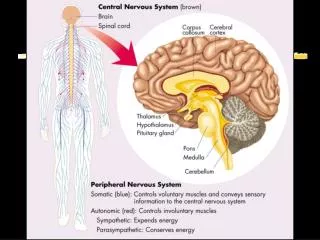
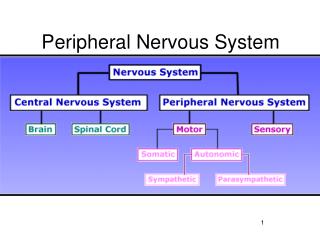
The Peripheral Nervous System (PNS) comprises sensory and motor neurons that facilitate communication between receptors and the central nervous system (CNS). It includes various neuron parts: axon, soma, dendrites, and synapses, and groups of nerve fibers known as nerves. Specialized neurons manage bodily functions, with the autonomic system divided into the sympathetic and parasympathetic divisions. Neurotransmitters like dopamine, serotonin, acetylcholine, norepinephrine, glutamate, and endorphins influence mood, movement, memory, and stress response, showcasing their critical role in daily life.

Peripheral Nervous Systems
E N D
Presentation Transcript
Sensory neurons – carry impulses from receptors to CNS • Motor neurons – carry impulses from CNS to effectors (muscles & glands) • Parts of the neuron • AXON • SOMA • DENDRITES • SYNAPSE Nerves – group of axons and/or dendrites of many neurons Neuro review
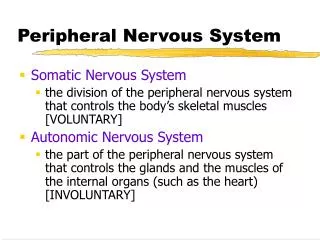
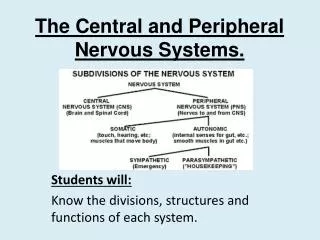
Motor portions of cranial & spinal nerves • Visceral motor neurons – smooth muscles, cardiac muscles, & glands • contract or relax muscles, increase & decrease gland secretions • 2 divisions • Sympathetic • Parasympathetic Autonomic Nervous System
Located in Thoracolumbar division • Controls internal organ • Dominates in stressful states • Anger • Fear • “Flight or Fight” • Intense physical activity • anxiety Sympathetic Division
Increases HR • Vasodiation in skeletal muscles • Dialates bronchioles • Liver changes glycogen to glucose • Decreases digestive juices • Slows peristalsis • Vasoconstriction in skin Sympathetic Nervous System
Also known as Craniosacral division • Dominates in Non-stressful situations (regular life) • Manages normal body functions Parasympathetic division
Chemicals that allow nerve impulses to travel over synapses Neurotransmitters
Physical Motivation • Stirs the brain to desire to accomplish things Dopamine
“Feel Good” chemicals • Impacts your mood & Anxiety • The higher the level – the “happier” you feel • Decreased amounts can be associated with depression • Some anti-depressants increase serotonin levels • Regulates your sleep (desire to sleep) • Physical movement Serotonin
Review • Excitability of muscles for movement • Also, associated with learning & memory • Participate in attention • Thought that low levels in the cerebrum are associated with Alzheimer’s Acetylcholine
Associated with mood • “mental perkiness” • Produced in the brain’s “pleasure center” • Works opposite Acetylcholine Norepinepherine
Brain’s major excitatory transmitter • Important in linking learning & long-term memory neurons Glutamate
Act like an opiate • Similar to heroine & morphine • Decreases pain • Reduces stress • Promotes the “floating” calm feeling • “Runner’s High” Endorphines