Understanding Human Respiration and Excretion Processes
This overview explains the vital processes of respiration and excretion in the human body. It covers how cells harness energy from food molecules via respiration, the structure and function of the respiratory system including the trachea, bronchi, lungs, diaphragm, larynx, and alveoli, as well as the harmful effects of tobacco on these systems. Additionally, it delves into the excretion process, detailing the roles of the kidneys, ureters, urinary bladder, and nephrons in filtering and eliminating waste, underscoring the importance of these biological functions for overall health.

Understanding Human Respiration and Excretion Processes
E N D
Presentation Transcript
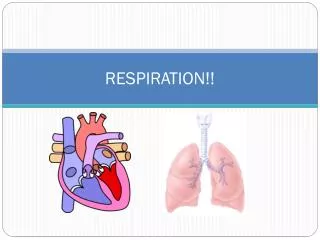
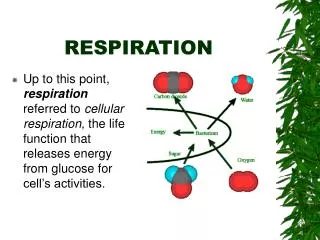
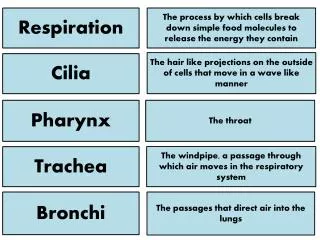
Respiration The process by which cells break down simple food molecules to release the energy they contain The hair like projections on the outside of cells that move in a wave like manner Cilia Pharynx The throat The windpipe, a passage through which air moves in the respiratory system Trachea Bronchi The passages that direct air into the lungs
Lungs An organ found in air breathing vertebrates that exchanges oxygen and carbon dioxide in the blood Tiny sacs of lung tissue specialized for the movement of gases between air and blood Alveoli Diaphragm A large muscle located at the bottom of a mammal’s rib cage that functions in breathing The voice box Larynx Vocal Cords Folds of connective tissue that stretch across the opening of the larynx and produce a person’s voice
Tar A dark sticky substance that forms when tobacco burns A colorless odorless gas produced when substances including tobacco burn Carbon Monoxide Nicotine A stimulant drug in tobacco that increases the activities of the nervous system, heart and other organs A physical dependence on a substance Addiction Bronchitis An irritation of the breathing passages in which small passages become narrower than normal and may be clogged with mucus
Emphysema A serious disease that destroys lung tissue and causes breathing difficulties Excretion The process by which wastes are removed from the body Urea A chemical that comes from the breakdown of proteins Kidney A major organ of the excretory system that removes urea and other wastes from the blood Urine A watery fluid produced by the kidneys that contains urea and other wastes
Ureter A narrow tube that carries urine form the kidneys to the urinary bladder A sac like muscular organ that stores urine until it is eliminated from the body Urinary Bladder Urethra A small tube through which urine flows from the body Small filtering structure found in the kidneys that removes waste from blood and produces urine Nephron