Download
1 / 10
100 likes | 184 Vues
Explore the significance of setting, mood, and conflict in storytelling. Discover how these elements shape a narrative and engage readers emotionally. Analyze examples like "Hunger Games" to deepen your understanding. Engage in discussions and activities to enhance comprehension.

E N D
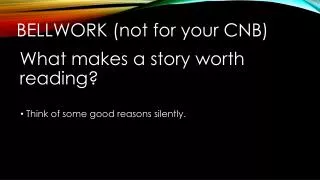
Bellwork (not for your CNB) What makes a story worth reading? • Think of some good reasons silently.
Objective for today • Analyze setting, mood, and conflict in a text.
Mood What is Setting What is Conflict What is
Setting • The time and place of a story • Created through the author’s descriptions of: • Time of day • Season • Year • Characters • Clothing • Weather • Buildings • Landscape
Mood • The emotions elicited in the READER by the atmosphere of the story (the emotions the reader feels while reading) • Different from tone • Setting is very important in establishing mood
COnflict • Conflict is the struggle between opposing forces.
What are some stories you have read where the setting has an effect on the plot/story? • Let’s look at Hunger Games.
Turn to page 28 – Text Analysis Workshop • Part I: Ethan Frome • Read as a class • Answer close read questions 1-4 as a class
Part III – The Bass, the River, and Shelia Mant • Read • Answer close read questions 1-3, 5-8, and 10. • Diagram conflict
What have we learned? • What is setting? Give evidence. • What is mood? Give evidence. • What is conflict? Give evidence.