
The Tundra
E N D
Presentation Transcript
The Tundra Angela Duncan
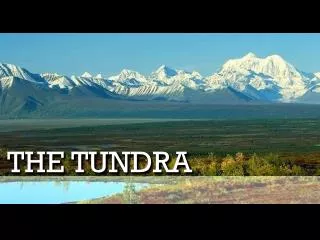
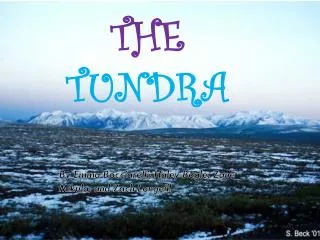
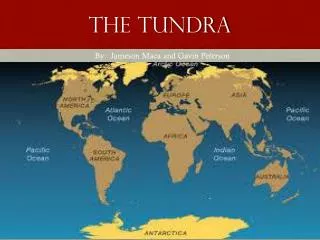
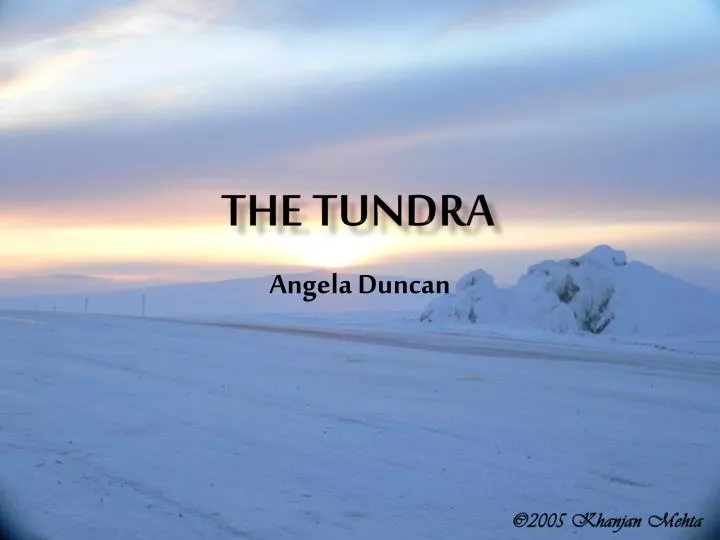
Geography • Located above the Arctic Circle • Stretches from northern Scandinavia, across Russia, Siberia, Northern Alaska, and finally to Canada. • Hugs the northern most ring of the planet
Climate • Generally cold and very dry • Short summers • 6 to 10 weeks long • Never gets warmer than 50°F • Cold winds continuously blow across the landscape • Average temperature is around -30°F
Soils • Topsoil composed mostly of humus due to slow decomposition rates • Layer of permafrost underneath • Constant freezing and thawing of the soil brings rocks to the surface • Polygonal pattern of stones on the surface
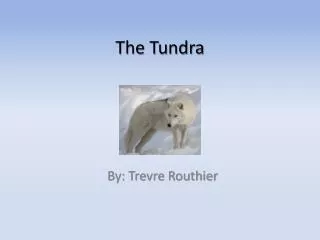
Biology • Vegetation: Lichens, Mosses, Grasses, Herbaceous Plants, Small Shrubs • Land Animals: Grizzly Bears, Gray Wolves, Caribou, Oxen, Weasels, Lemmings, Arctic and Red Foxes, Moose • Sea Animals: Walruses, Orcas, Beluga Whales, Sea Lions • Birds: Snowy Owls, Golden Eagles, Bald Eagles, Arctic Geese, Puffins, Arctic Loons
Human Influence • Used to be the only biomes untainted by humankind • Drilling for Oil • Pesticides from nearby civilization • Chernobyl Disaster • 1986 Ukraine • Great explosion of the power plant • Massive amounts of radiation released (cesium-137) • Covered the Norwegian tundra in the form of rainfall • Damage to the food chain