Power Dynamics and Fate in *Romeo and Juliet*: A Study of Key Characters and Themes
In the opening scenes of *Romeo and Juliet*, we witness the intricate interplay of power dynamics and fate. Sampson’s provocation ignites a brawl, while Benvolio and Tybalt highlight the tensions between the Montagues and Capulets. Juliet’s limited autonomy and the pressures of societal norms are showcased through her conversations with Paris and her parents. Moreover, Romeo's reluctance to attend the ball introduces foreshadowing of fate’s role. This analysis examines the implications of parental influence, social hierarchies, and the nuances of romantic longing.

Power Dynamics and Fate in *Romeo and Juliet*: A Study of Key Characters and Themes
E N D
Presentation Transcript
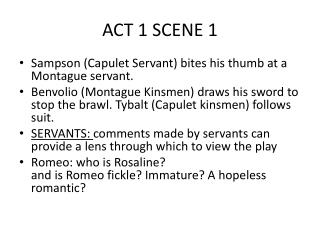
ACT 1 SCENE 1 • Sampson (Capulet Servant) bites his thumb at a Montague servant. • Benvolio (Montague Kinsmen) draws his sword to stop the brawl. Tybalt (Capulet kinsmen) follows suit. • SERVANTS: comments made by servants can provide a lens through which to view the play • Romeo: who is Rosaline?and is Romeo fickle? Immature? A hopeless romantic?
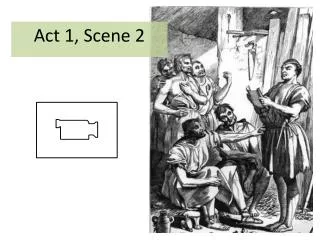
ACT 1 SCENE 2 • Lord Capulet and Paris discuss Juliet’s marriage to ParisJuliet’s father can force her to marry whomever he wants. Such is the difference between being a man and woman in Verona. • Peter (servant) functions as a comedic tool but also to further comment on power structures.his poor education is also part of the entrenched social structures. Juliet has no power because she is a woman. Peter has no power because he is a lowly servant and therefore cannot read.
ACT 1 SCENE 3 • this scene continues to develop the issue of parental influence, particularly the strength of that influence over girls. Lady Capulet, herself a woman who married at a young age, offers complete support for her husband’s plan for their daughter, and puts pressure on Juliet to think about Paris as a husband before Juliet has begun to think about marriage at all. Quality of life for the poor? Nurse has no family left
ACT 1 SCENE 4 • Fate: l 106-114Romeo first is reluctant to attend the ball because of a dream he had. He then states that the nights events of tonight may lead to his death, yet fate has taken over and he has no choice in the matter. Mercutioand puns. A slippage, or twist, in the meaning of a word. That word, which previously meant one thing, now suddenly is revealed to have additional interpretations. The imagery in QM begins as an innocent fantasy and ends in a dark twisted world.