Insights from Mexico's Third-Party Entry-Level Commercial Driver Training Case Study
This case study provides an in-depth analysis of Mexico's third-party entry-level commercial driver training system. It highlights the importance of industry-driven qualifications, curriculum effectiveness, and the role of regulation in ensuring proper training. The study examines methods employed, the accreditation process for schools and instructors, licensing procedures, and the economic and environmental impacts of driver training. By understanding Mexico's approach, valuable lessons can be drawn for improving driver training programs globally.

Insights from Mexico's Third-Party Entry-Level Commercial Driver Training Case Study
E N D
Presentation Transcript
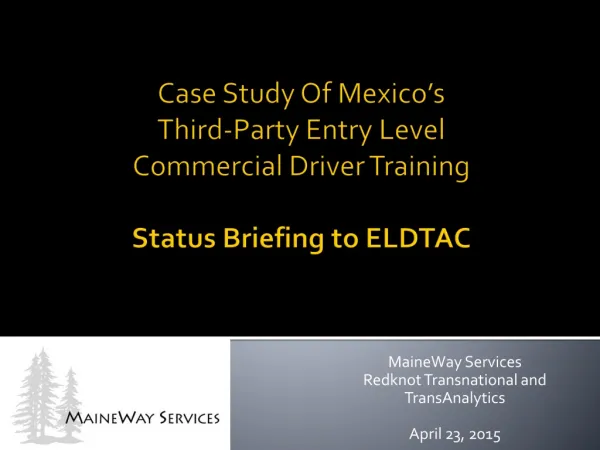
MaineWay Services Redknot Transnational and TransAnalytics April 23, 2015 Case Study Of Mexico’s Third-Party Entry Level Commercial Driver TrainingStatus Briefing to ELDTAC
Overview • Why Study Mexico’s Case in Numbers • Study Methods • Study Status Case Study of Mexico’s Third-Party Entry Level Commercial Driver Training - MaineWay Services Team
Philosophical Lessons Differences Regulation of services, not entities Industry is responsible for driver’s qualifications Training is the opposite of barrier toentry It takes a village to regulate training No conflict of interest measuring performance Effectiveness has economic/environmental face Case Study of Mexico’s Third-Party Entry Level Commercial Driver Training - MaineWay Services Team
Practical Information • Curricula • School/Instructor Accreditation Process • Training Certificate Operations • Driver Licensing Process Case Study of Mexico’s Third-Party Entry Level Commercial Driver Training - MaineWay Services Team
Questions? Thank you! Case Study of Mexico’s Third-Party Entry Level Commercial Driver Training - MaineWay Services Team