Understanding the Human Respiratory System: Major Organs and Functions Explained
Explore the intricacies of the human respiratory system in this informative video by Dalton McBride. Learn about the major organs involved, including the nose, trachea, larynx, lungs, epiglottis, and diaphragm. Discover how the system functions to supply oxygen and remove carbon dioxide, house smell receptors, and facilitate sound production. Through engaging visuals, see how breathing begins at the mouth and nose, travels down to the trachea, and reaches the alveoli before oxygen enters the bloodstream. Ideal for students and anyone interested in human biology!

Understanding the Human Respiratory System: Major Organs and Functions Explained
E N D
Presentation Transcript
By: Dalton McBride Respiratory system
VIDEO http://www.youtube.com/watch?v=sU_8juD3YzQ
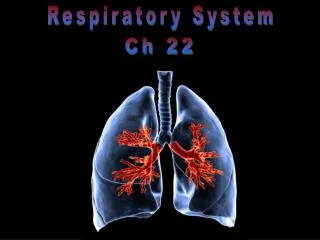
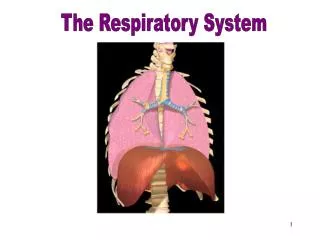
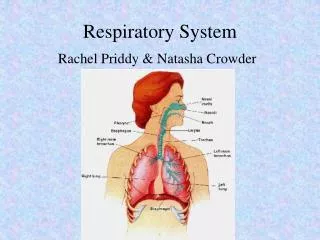
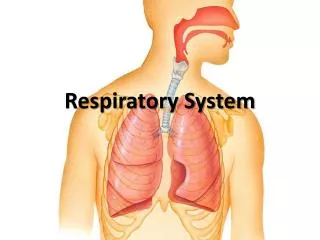
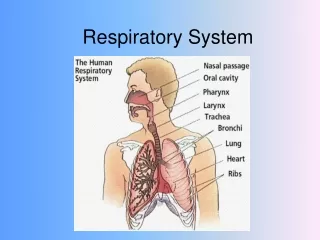
MAJOR ORGANS The nose, trachea, larynx, lungs, epiglottis, and the diaphragm are the major organs of the respiratory system.
MAJOR FUNCTIONS • Supplies body with O2 and disposes of Co2 • Houses olfactory (smell) receptors • Provides sound and speech making organs and tissues.
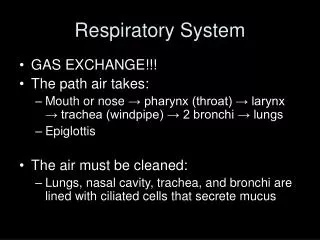
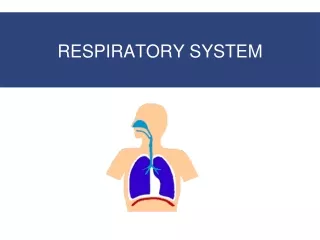
HOW THE SYSTEM WORKS The breathing starts at your nose and mouth, then travels down your throat to your trachea. Then your trachea divides into two tubes called bronchial tubes. To breath good your bronchial tubes need to be as open as possible. Then from there through your lungs to bronchioles. From there into little sacs called the alveoli sacs, there are millions of these in your body. Then from there to your heart and is pumped through your body.