Evaluating Interest Rate Dynamics: Insights from Logan Miller and James Bello
Explore the multifaceted landscape of interest rates as Logan Miller and James Bello delve into the yield curve's current state, historical analysis, and implications of past crises, such as the European Debt Crisis and QE policies. Understand the relationship between bond duration, sector strategies, and the effects of the Great Rotation on investment decisions. With an emphasis on current environments and Fed actions, this analysis predicts continued volatility and changing trends as investors adapt to rising rates and shifting market dynamics.

Evaluating Interest Rate Dynamics: Insights from Logan Miller and James Bello
E N D
Presentation Transcript
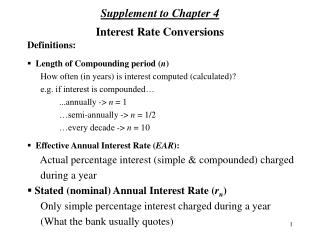
Interest Rate Evaluation Logan Miller and James Bello
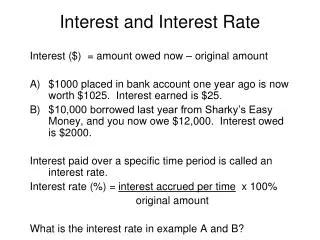
Outline • Yield Curve • Normal, flat, inverted • History of the yield curve • European Crisis, Quantitative Easing • Current Environment • Fed action, outflow of bonds • Duration Strategy, Sector Strategy • Great Rotation/Outlook
Flat Yield Curve • Last seen 2006 - 2007 • Prior to this the economy was growing rapidly • Fed increase interest rates • Sign of transition and uncertainty
Inverted Yield Curve • Last seen 2006 – 2007 • Seen as an accurate predictor of recessions • Suggests a market belief that inflation will remain low • The lower bond yields are offset by lower expected inflation
European Debt Crisis • 2009 investors begin to worry • 2010 • Greece requests bailout in April • Ireland bailed out in November • 2011 • Portuguese bailout • US debt downgraded to AA+ in August • 2012 • Spanish bailout in September
Quantitative Easing • QE1 • Nov. 2008 Fed agrees to buy 600B MBS • March 2009 Fed announces more MBS purchases and 300B of treasuries • QE2 • Nov 2010 Fed begins buying 75B/month long term paper • Sept 2011 buy 400B of bonds with 6 – 30 yr maturity while selling bonds with < 3yr maturity • Program lasted through 2012 • QE3 • Sept 2012 Fed announces it will buy 40B of AMBS per month until labor market improves substantially • Dec 2012 Fed voted to continue AMBS buying plus 45B of treasuries per month
Logan Miller and James Bello Current Environment
Logan Miller and James Bello Duration Plays • Bonds with lower duration will outperform bonds with higher duration in a rising rate environment • Higher coupon bonds • Lower maturity bonds • The opposite is typically true when rates are decreasing, as they have for the past few years
Logan Miller and James Bello FRNs Becoming Attractive • Bonds with coupons linked to Libor do well in a rising-rate environment • Coupons increase as rates go up; better for the investor • Short-term (FRNs) investments become attractive because they are considered less risky and have very low duration
Logan Miller and James Bello Sector Plays
The Great Rotation • Investors switching from fixed income to equities • Idea that fixed income is all risk and no return • Is it a real threat? • European debt crisis better • Fed eventually has to stop QE
The Great Rotation • Past several years cash has essentially yielded 0% • 1.3T has been moved out of money markets as a result • Investors moved into fixed income • Flight to quality • Interest keeps up with inflation • $810B retail dollars have flowed into fixed income since January 2008
Great Rotation • Rates are beginning to rise • Rates rise, Prices fall • Investors focus on not losing money • Investors have begun moving their cash back into money markets at the higher rates • Investors also have the option of moving cash to the front end of the curve • IG bonds are a proxy for cash • It is unlikely that people will move into stocks because it is a different risk bucket
Logan Miller and James Bello Outlook • Rates will continue to be volatile • Potential tightening until the Fed acts • Volatility may cause higher risk premiums • Long-term rates will widen as the economy gets better • Demand for shorter maturity bonds will be strong • The Fed will continue to buy assets longer than the market expect; unpredictable • The good is bad for bondholders