Download

1 / 8
80 likes | 192 Vues
This lesson delves into the political climate leading up to the American Civil War, focusing on the secession of Southern states following Lincoln's election in 1860. Students will analyze key concepts such as the political spectrum, electoral college, and popular sovereignty. The discussion will be framed around the extreme viewpoints regarding slavery, highlighting the escalating tension between states and the implications of events like the Fort Sumter incident. Students will engage in critical thinking and define these terms in their own words to deepen their understanding.

E N D
9/29/2011 Secession
Get out your notebooks and be ready to go 2nd Hour Bell Work
Define in your own words (that means noo dictionary) • Political spectrum • Electoral college • Popular sovereignty Bell Work
Models political viewpoints, on various degree of extremes, in 1860 it was slavery Political spectrum Right to Slavery Abolitionists Moderates
Lincoln just got elected……. Was not even on 10 Southern ballots. His inauguration was all the way in March. • What does the South do now? **Remember the tension between states is at an all time high** Now What?
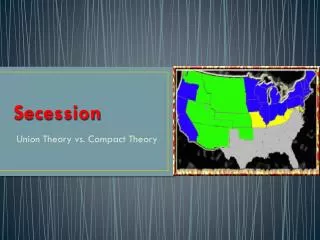
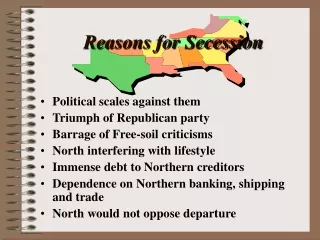
Secession Winter of 1860-61 Blue: Union States with No Slaves Yellow: Union States with Slaves Dark Red: States the seceded Before April, 15th, 1861 Light Red: States that seceded After April 15, 1861
Fort Sumter • Union Fort, near Charleston, • SouthCarolina. Had Union troops • in it. South Carolina militia were • called to try to take it. • It surrendered after 43 hours • Gave Lincoln what He needed to • declare war • Lincoln called for 75,000 • volunteer Army. • - Virginia, North Carolina, Tennessee and Arkansas seceded after.