Download
1 / 13
130 likes | 291 Vues
This article explores the various hormones produced by major organs, detailing their chemical composition, sources, stimuli, and target organs. Key hormones include Prostaglandins (PGs), Gastrin, Secretin, Cholecystokinin (CCK), Erythropoietin, Active Vitamin D3, Atrial Natriuretic Peptide (ANP), Leptin, and Resistin. Each hormone plays critical roles ranging from stimulating gastrointestinal functions to regulating blood pressure and energy expenditure. Understanding these hormones is essential for comprehending human physiology and their impact on health.

E N D
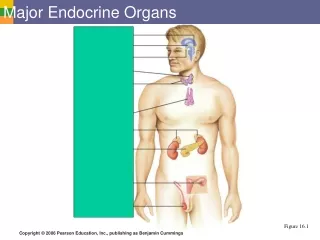
Hormones produced by other Major organs Kelly Diaz 3/4/14 A&P
Prostaglandins (PGs) • This includes several groups indicated by the letters A-I (PGA-PGI) • The chemical composition is derived form the fatty acid molecules • Source: the plasma membranes of virtually all body cells stimulus is various (local, irritation, hormones, ect.) • This hormone has many targets, but only acts locally at site of release • Ex. - cause constriction of the respiratory passages ways - stimulate the muscles of the uterus and promote labor - promote inflammation and pain
Gastrin • The chemical composition is a peptide • Source: the stomach • To stimulate the hormone is food • The target is the stomach: inhibiting glands to release hydrochloric acid (HCI)
Intestinal Gastrin • Its is a peptide • The source is duodenum of the small intestine • The stimulus is food, especially fats • The target is the stomach and it inhibits HCI secretion and gastrointestinal tract mobility
Secretin • It’s a peptide • the source: duodenum • The stimulus is food • The target organs arethe pancreas which stimulates the bicarbonate-rich juice • The liver: increases release of bile • The stomach: reduce secretions
Cholecystokinin (CCK) • It’s a peptide • Source: duodenum • The stimulus is food • The organs it affects are the pancreas which stimulates the enzyme-rich juice • Gallbladder: stimulates expulsion of stored bile • Duodenal papilla: causes the sphincter to relax, allowing the bile and pancreatic juice to enter the duodenum
Erythropoietin • The chemical composition is glycoprotein • The source is the kidney • The stimulus is the hypoxia • The target is the bone marrow and they stimulate production of red blood cells
Active vitamin D3 • It’s a steroid • The source is the kidney(activates the provitamin D made by epidermal cells) • The stimulus is PTH • The target organ is the intestine stimulating active transport of dietary calcium across intestinal cell membranes
Atrialnatriuretic peptide (ANP) • It’s a peptide • The source is the heart • The stimulus is the stretching of atria of the heart • The target organs are kidney which inhibits sodium ion reabsorption and renin release • Adrenal cortex: inhibits secretion of aldosterone and that decreases blood pressure and volume
Leptin • It’s a peptide • Source: Adipose tissue • The stimulus is fatty foods • The target organ is the brain which suppresses appetite and increase energy expenditure
Resistin • It’s a peptide • The source adipose tissue • It doesn’t have a known stimulus • The targets are fat, muscle, liver: antagonizes insulin’s action on liver cells
Credits • Elaine N. Marieb- Essentials of Human Anatomy and Physiology