
SlideServe
Menu
Préférences
© SlideServe · v2026

Soil : Not Just ‘ Dirt ’

feo avatar
33 diapositives · 796 Views · Jul 21, 2014

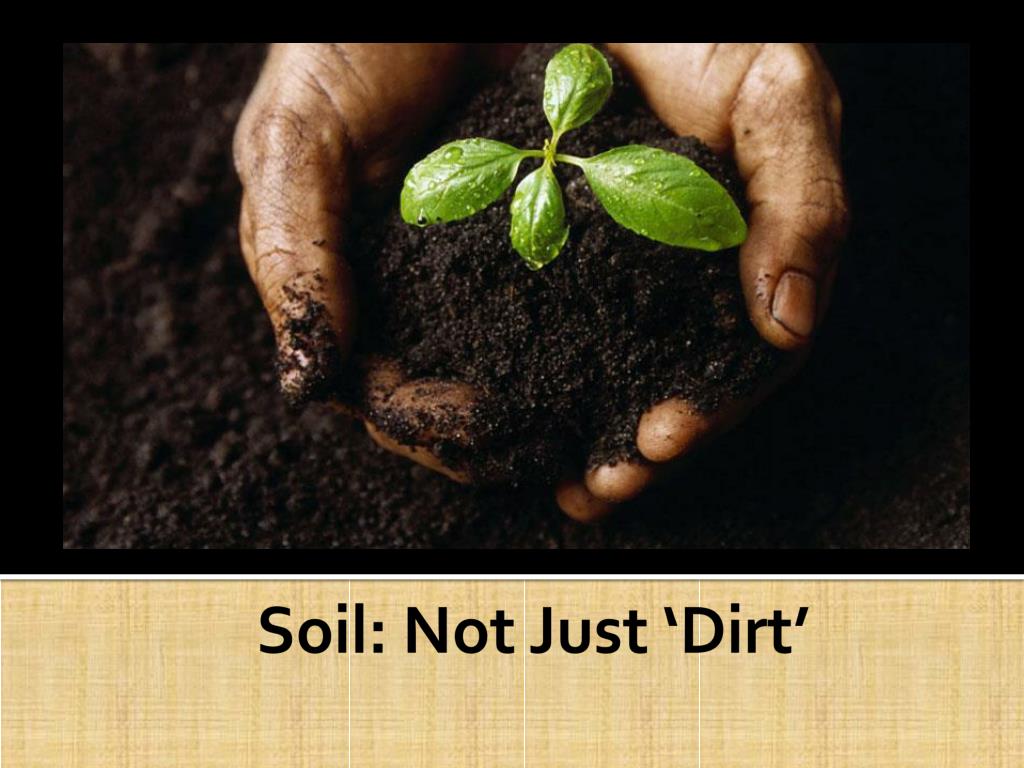
Soil : Not Just ‘ Dirt ’. What is Soil ?. Soils are a major component of the world’s ecosystems. They form at the interface of the Earth’s atmosphere , lithosphere (rocks), biosphere (living matter) and hdyrosphere (water). What is Soil ?.
Soil : Not Just ‘ Dirt ’ - slide 1
01 / 33Soil : Not Just ‘ Dirt ’
1 / 17

Télécharger la présentation

Soil : Not Just ‘ Dirt ’
Une image / un lien ci-dessous est fourni (tel quel) pour télécharger la présentation

Politique de téléchargement : le contenu du site vous est fourni TEL QUEL pour votre information et votre usage personnel ; il ne peut être vendu, concédé sous licence ni partagé sur d’autres sites sans l’accord de son auteur.Le contenu vous est fourni TEL QUEL, pour votre information et votre usage personnel uniquement. Téléchargez la présentation en cliquant sur ce lien. Lors du téléchargement, si vous ne parvenez pas à télécharger une présentation, l’éditeur a peut-être supprimé le fichier de son serveur.Pendant le téléchargement, si vous ne parvenez pas à obtenir une présentation, le fichier a peut-être été supprimé par l’éditeur.

F I N

Plus de contenu associé

Transcription de la présentation
  1. Soil: Not Just ‘Dirt’

  2. What is Soil? Soils are a major component of the world’s ecosystems. They form at the interface of the Earth’s atmosphere, lithosphere (rocks), biosphere (living matter) and hdyrosphere (water).

  3. What is Soil? Soil is what forms the outermost layer of the Earth’s surface. Soil comprise weathered bedrock (regolith), organic matter (both dead and alive), air and water. LIKE LIVING SKIN OF THE EARTH!

  4. What is soil? • Soil has matter in all three states: • organic and inorganic matter form the solid state • soil water form the liquidstate (precipitation, groundwaterandseepage) • soil atmosphere forms the gaseous state

  5. Whatdoessoilcontain?

  6. Functions of soil

  7. Functions of soil • Soils are important to humans in many ways: • soil is the medium for plant growth, which most of foods for humans are grown in • soil stores freshwater, 0.005% of world’s freshwater • soil filters materials added to the soil, keeping quality water

  8. Functions of soil • soil is nature’s recycling system. Waste and dead matter are decomposed and their nutrientsmade available for new life. • soil is the habitat for billions of micro-organisms, as well as other larger animals • soil provides raw material in the forms of peat, clay, sands, gravel and minerals

  9. Functions of soil Soils breathe! Gases are exchanged between the soil surface and the air. Gases like oxygen andmethane are absorbed, while, while gases like carbon dioxide and nitrous oxide are released. The soilprovides a valuable carbon sink. The evaporation of soil moisture also affects air temperature andweather patterns.

  10. SoilBiology Soil is by far the most biologically diverse part of the earth. It containsa complex food web of prey, predators and decomposers. Theseorganisms require the same elements we require: air, water, foodand shelter.

  11. SoilBiology

  12. SoilBiology One teaspoon of healthy soil may contain: • Bacteria- 100 million to 1 billion • Fungi- up to 100 yards of fungal hyphae • Protozoa- several thousand • Nematodes- up to several hundred • Arthropods (insects,spiders,centipeds)-500-2000 • Earthworms-arid soils may have none to several

  13. SoilBiology

  14. SoilHorizons

  15. SoilHorizons O – Organic Horizon: l - undecomposed litter f – party decomposed litter h – well decomposed humus

  16. SoilHorizons A – Mixed mineral-organic Horizon: h – humus p – ploughed in field or garden g – gleyed or waterlogged

  17. SoilHorizons E - Eluvial or leached Horizon: a – strongly leached, and ash coloured b – weakly bleached, light brown

  18. SoilHorizons B – Illuvial or deposited Fe – iron deposited t – clay deposited h – humus deposited

  19. SoilHorizons C – Bedrock or parent material r – rock u – unconsolidated loose deposits

  20. SoilHorizons

  21. Formation of soil Soil is formed from rocks and decaying plants and animals. Soil forming process consists of: • Gains and losses of material to and from the profile • Movement of water between the horizons • Chemical transformation within each horizon .

  22. Formation of soil Therefore soils are open systemsin a steady-state equilibrium

  23. Formation of soil • Theprincipleprocessesinclude • Weathering • Translocation • Organicchanges (degradation, humification, • mineralization) • Gleying (waterlogging)

  24. Formation of soil

  25. Formation of soil

  26. SoilFormation Natural processes can take 500 years to form one inch of top soil. http://www.pearsonhotlinks.com/ Soils are vital to humans, but take a long time to develop, so should be considered a non-renewable resource

  27. SalinizationorAlkalization

  28. SoilDegradation

  29. Value of Soil “The soil is the great connector of lives, the source and destination of all. It is the healer and restorer and resurrector, by which disease passes into health, age into youth, death into life. Without proper care for it we can have no community, because without proper care for it we can have no life.” ― Wendell Berry, The Unsettling of America: Culture and Agriculture

  30. Movies Symphony of Soil https://www.youtube.com/watch?v=K5QYZ-LRXW4 Dirt: The Movie https://www.youtube.com/watch?v=lvrww8iMl-A

  31. Paintingwithsoil

  32. A littleresearch…….. • What is pedology? • What is compost? • How tomakecompost? Is it possibleto • makecompost at homeor at school?